By clicking "Accept all cookies", you agree to storing cookies on your device to enhance site navigation, analyze site usage and assist in our marketing efforts as outlined in our privacy policy.
By clicking 'Accept all cookies', you agree to storing cookies on your device to enhance site navigation, analyze site usage and assist in our marketing efforts as outlined in our privacy policy.
Why Branding Matters: The Real Stakes by Metabrand
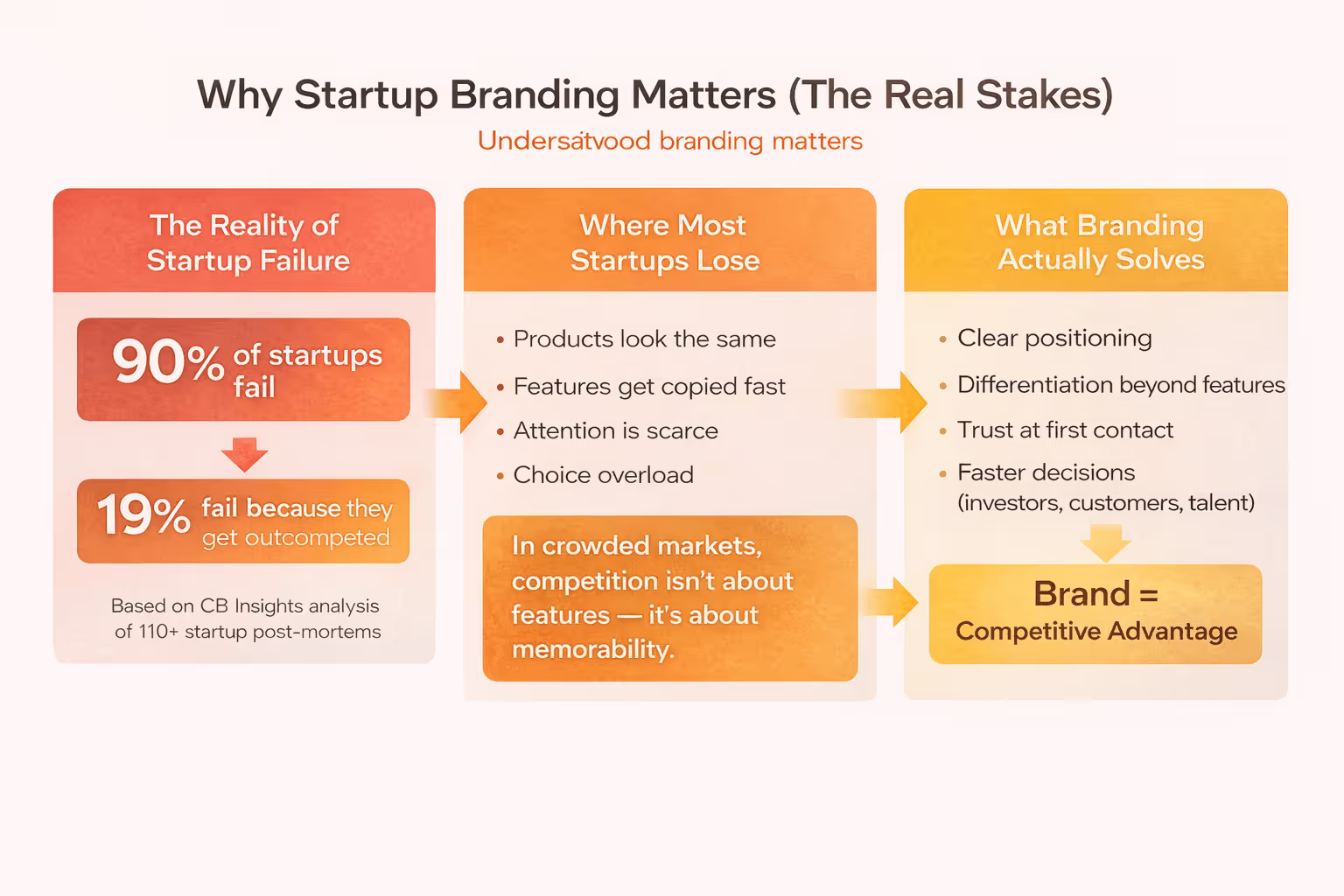
Nine out of ten startups fail.
This isn't speculation — it's the conclusion from CB Insights' analysis of over 110 startup post-mortems. The causes vary: no market need (42%), running out of cash (29%), wrong team (23%). But one factor gets overlooked in most failure analyses: 19% of startups die because they get outcompeted.
Not out-engineered. Not out-funded. Outcompeted.
In markets where products look increasingly similar, where features get copied in weeks, and where customers scroll past hundreds of options, the startups that survive are the ones people remember. The ones that feel different. The ones with a brand.
Companies ready to work with a specialized startup branding agency can connect with Metabrand — this guide explains what to consider if you're still evaluating options.
This guide is built for founders, marketing leaders, and operators who understand that startup branding isn't about looking "nice" — it's about clarity, positioning, and momentum. It's the most comprehensive resource on branding for startups you'll find: backed by data from McKinsey, Interbrand, and CB Insights; informed by frameworks from Y Combinator, Sequoia, and First Round Capital; and grounded in real experience working as a startup branding agency with early-stage companies.
Whether you're pre-seed and preparing to launch, or Series A and preparing to scale, this guide will show you exactly how to build a brand that makes investors pay attention, customers choose you, and competitors irrelevant.
The Hidden Cost of "We'll Brand Later"
Most startups treat branding as a post-product-market-fit problem. First build, then brand. First grow, then polish.
This thinking is expensive.
The Hidden Cost of "We'll Brand Later"
The Hidden Cost of "We'll Brand Later"
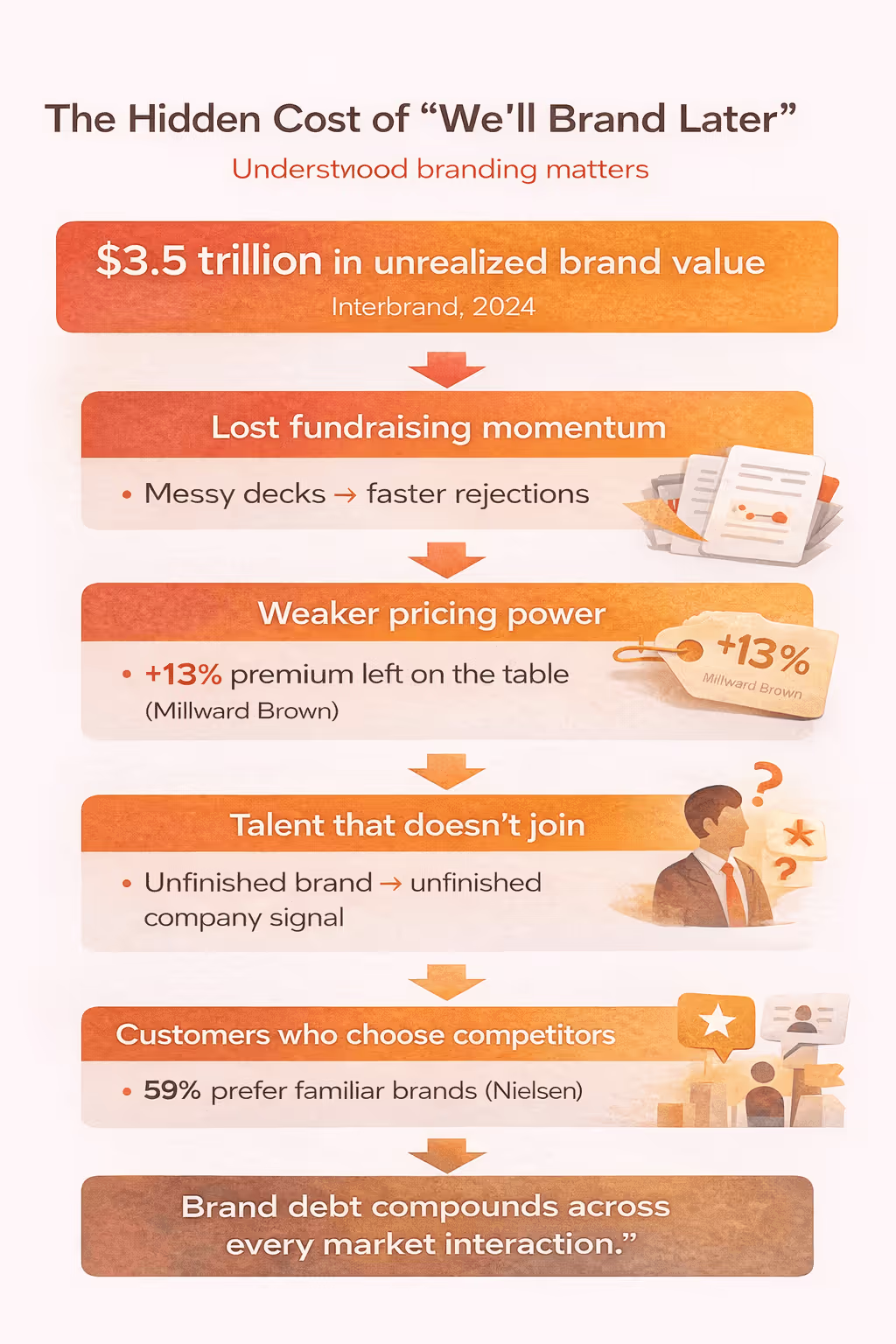
Interbrand's 2024 analysis of the world's 100 most valuable brands revealed a staggering number: $3.5 trillion in unrealized value — lost because companies underinvested in brand while chasing short-term performance metrics. For that year alone, this translated to $200 billion in lost revenue.
"A lack of investment in long-term brand strategy has left the Best Global Brands with at least $3.5 trillion of unrealized value."— Interbrand Best Global Brands Report, 2024
The pattern holds for startups too, just at a different scale. The costs of ignoring brand show up everywhere:
Lost fundraising momentum. Investors see hundreds of pitch decks. The ones that look amateur get closed faster. A deck with clear positioning and professional presentation doesn't guarantee funding — but a messy one guarantees doubt.
Weaker pricing power. Research from Millward Brown shows that strong brands command a 13% price premium over weak ones. For a startup selling a $10,000/year SaaS product, that's $1,300 per customer left on the table — every year.
Talent that doesn't join. Top candidates research companies before accepting offers. They look at your website, your LinkedIn presence, your visual identity. A brand that feels unfinished signals a company that might be unfinished too.
Customers who choose competitors. In a Nielsen study, 59% of consumers said they prefer to buy from brands familiar to them. Familiarity doesn't come from features — it comes from consistent, memorable brand presence.
The "we'll rebrand later" approach isn't just a delay. It's a compounding tax on every interaction your startup has with the market.
When Should a Company Invest in Branding?
Brand isn't equally important at every moment. There are inflection points where the right brand work creates disproportionate returns.
"Company purpose: Start here — define your company in a single declarative sentence. This is harder than it looks."— Sequoia Capital
This is brand work. Clarifying what you do, who you serve, and why it matters — distilled into language so clear that an investor grasps it immediately. Startups that nail this positioning before fundraising don't just create better decks; they have better conversations, answer questions more confidently, and close rounds faster.
The Airbnb founders famously used Sequoia's framework to craft their pitch. The result wasn't just a good deck — it was the clarity that helped them raise the capital to become a $100 billion company.
Before Launch
Your launch is a first impression at scale. The startup community, potential customers, press — they're all forming opinions in the first moments of contact. A strong brand makes those impressions work for you. A weak one makes you forgettable.
Y Combinator has funded over 5,000 companies with a combined valuation exceeding $800 billion. Their portfolio includes Airbnb, Stripe, Dropbox, Coinbase, and Reddit — companies that understood brand from the start. These weren't "design-first" companies. They were clarity-first companies that used brand to communicate their difference.
After Product-Market Fit
Once you've found PMF, brand becomes your scaling infrastructure. It's the system that lets you hire marketers who communicate consistently, launch campaigns that compound, and expand into new markets without losing coherence.
McKinsey research shows that companies using data-driven brand approaches see up to 30% efficiency gains in marketing and 10% top-line growth — without increasing budget. The efficiency comes from clarity: when everyone knows what the brand stands for, less time gets wasted on alignment and more gets spent on execution.
What This Guide Covers
This guide is organized around the questions founders actually ask:
What Startup Branding Actually IsThe real definition of brand (hint: it's not your logo), the three pillars every startup brand needs, and how B2B and B2C branding differ.
When Branding Creates Disproportionate Returns by Metabrand
Brand Positioning for Growth-Stage The strategic foundation everything else builds on — frameworks from First Round Capital and April Dunford, with step-by-step process and real examples.
Brand Messaging Framework How to translate positioning into language that resonates — value propositions, key messages, proof points, and tone of voice that converts.
Brand Naming How to find a name that's memorable, available, and protectable — the complete process from brainstorming to trademark registration.
Visual Identity for Tech Logo, color, typography, and supporting elements — how to build a visual system that's distinctive, cohesive, and scales with your company.
Brand Guidelines That Work How to document your brand so teams actually use it — formats, structure, and governance for every stage from seed to Series C.
When to Rebrand Your Startup How to know when your brand needs an update, and how to execute without breaking what's working.
Finding the Right Branding Partner Agency vs. freelancer vs. in-house, the best startup branding agencies in 2026, and how to evaluate options at every budget level.
How Much Does Branding Cost Real pricing by stage and scope — from $15K seed budgets to $500K+ enterprise rebrands, with budget templates and hidden costs.
B2B SaaS Branding How to build a brand that wins enterprise deals — trust signals, multi-stakeholder messaging, and differentiation in crowded categories.
Fintech Branding Building trust in financial technology — the unique challenges of security, regulation, and balancing innovation with stability.
The ROI of Branding Hard data on how brand investment pays back — in fundraising, pricing power, hiring, and market resilience.
The Branding Process Step-by-step methodology from discovery to activation — the five phases, timelines, and how to run the process yourself.
Branding ResourcesTools, templates, and recommended reading to continue your brand education.
Each section includes links to deeper guides on specific topics — positioning frameworks, naming strategies, visual identity checklists — so you can go as deep as you need.
Let's start with the fundamentals: what brand actually means for a startup, and why most founders get it wrong.
What Is Startup Branding? The Real Definition
Brand vs Brand Identity vs Logo by Metabrand
Most founders think they know what branding means. They're usually wrong.
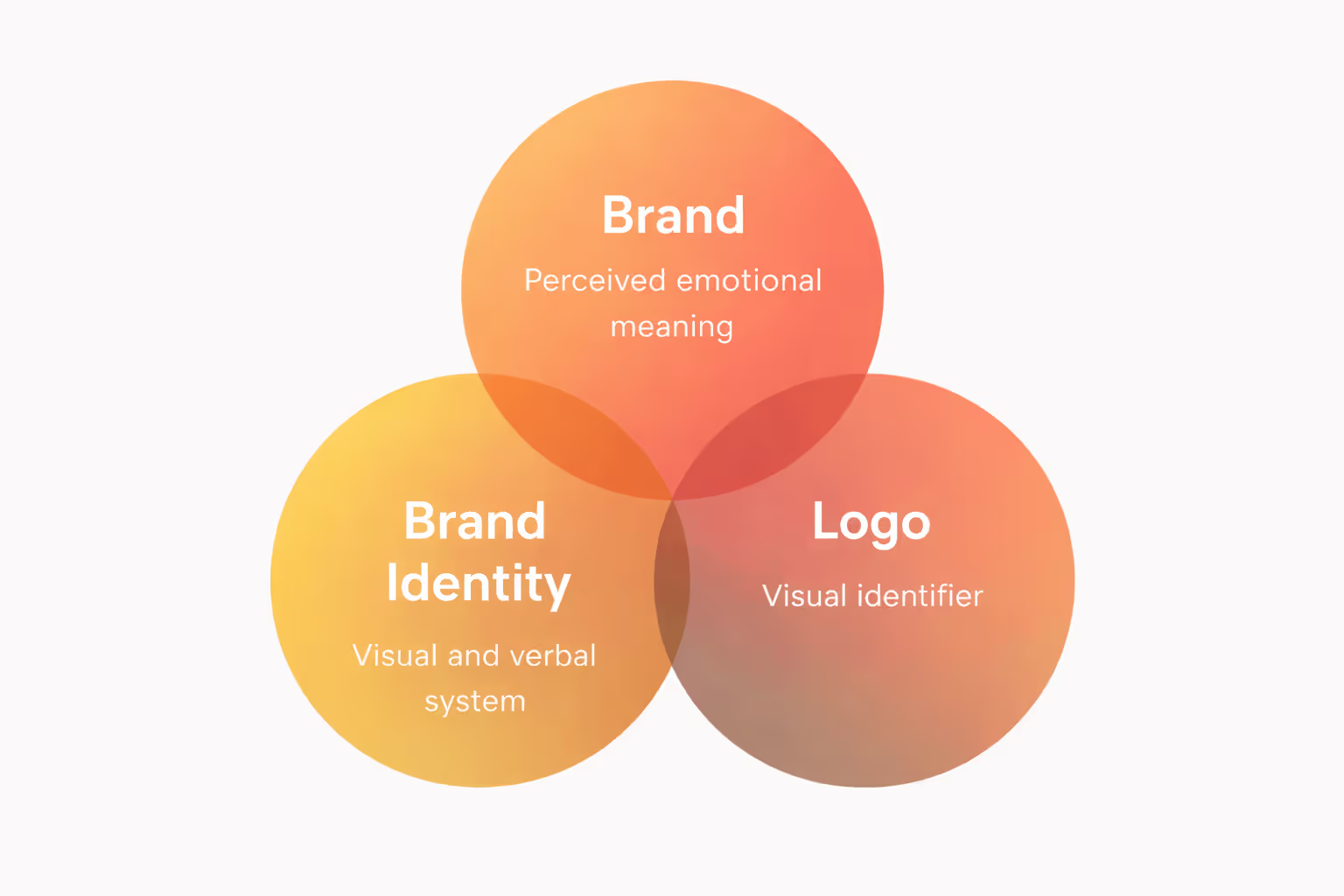
Ask ten startup founders to define "brand" and you'll hear: logo, colors, fonts, maybe a tagline. These are brand artifacts — outputs of the branding process. But they're not the brand itself.
Marty Neumeier, author of The Brand Gap and one of the most influential voices in modern branding, puts it simply:
"A brand is not a logo. A brand is not a corporate identity system. It's a person's gut feeling about a product, service, or company."— Marty Neumeier, The Brand Gap
Your brand is what people think and feel when they encounter your startup. It's the split-second judgment an investor makes when your pitch deck lands in their inbox. It's the assumption a customer makes about your product quality based on your website. It's the story a candidate tells themselves about what it would mean to work for you.
You don't fully control your brand — it lives in other people's minds. But you can shape it. That's what startup branding actually is: the strategic work of defining who you are, who you're for, and why you matter — then expressing that consistently across every touchpoint.
This concept isn't new. Brand management as a discipline emerged in the 1930s at Procter & Gamble, when Neil McElroy wrote his famous memo proposing dedicated teams for individual brands. What's changed is the speed and scale at which startups must build brands — and the stakes of getting it wrong.
Brand Strategy vs. Brand Identity: What's the Difference?
These terms get used interchangeably. They shouldn't.
Brand strategy is the thinking. It answers fundamental questions:
What problem do we solve?
Who specifically do we solve it for?
Why should they choose us over alternatives?
What do we believe that others in our market don't?
Brand identity is the expression. It's how strategy becomes tangible:
Visual system (logo, colors, typography, imagery)
Verbal system (messaging, tone of voice, key phrases)
Experiential system (how interactions feel across touchpoints)
The mistake most startups make is jumping straight to identity without doing the strategy work first. They hire a designer, pick colors they like, and end up with a visual system disconnected from any strategic foundation.
"Branding is the process of connecting good strategy with good creativity."— Marty Neumeier
A logo designed without positioning is just decoration. A messaging framework built without understanding your audience is just words. Strategy comes first — always.
Global agencies like Landor (founded in 1941, now part of WPP) and Interbrand (which pioneered brand valuation in 1988) built their reputations on this principle: strategy before design. The same logic applies whether you're rebranding a Fortune 500 company or launching a seed-stage startup.
What Startups Need to Focus on Branding by Metabrand
The Three Pillars of Startup Brand
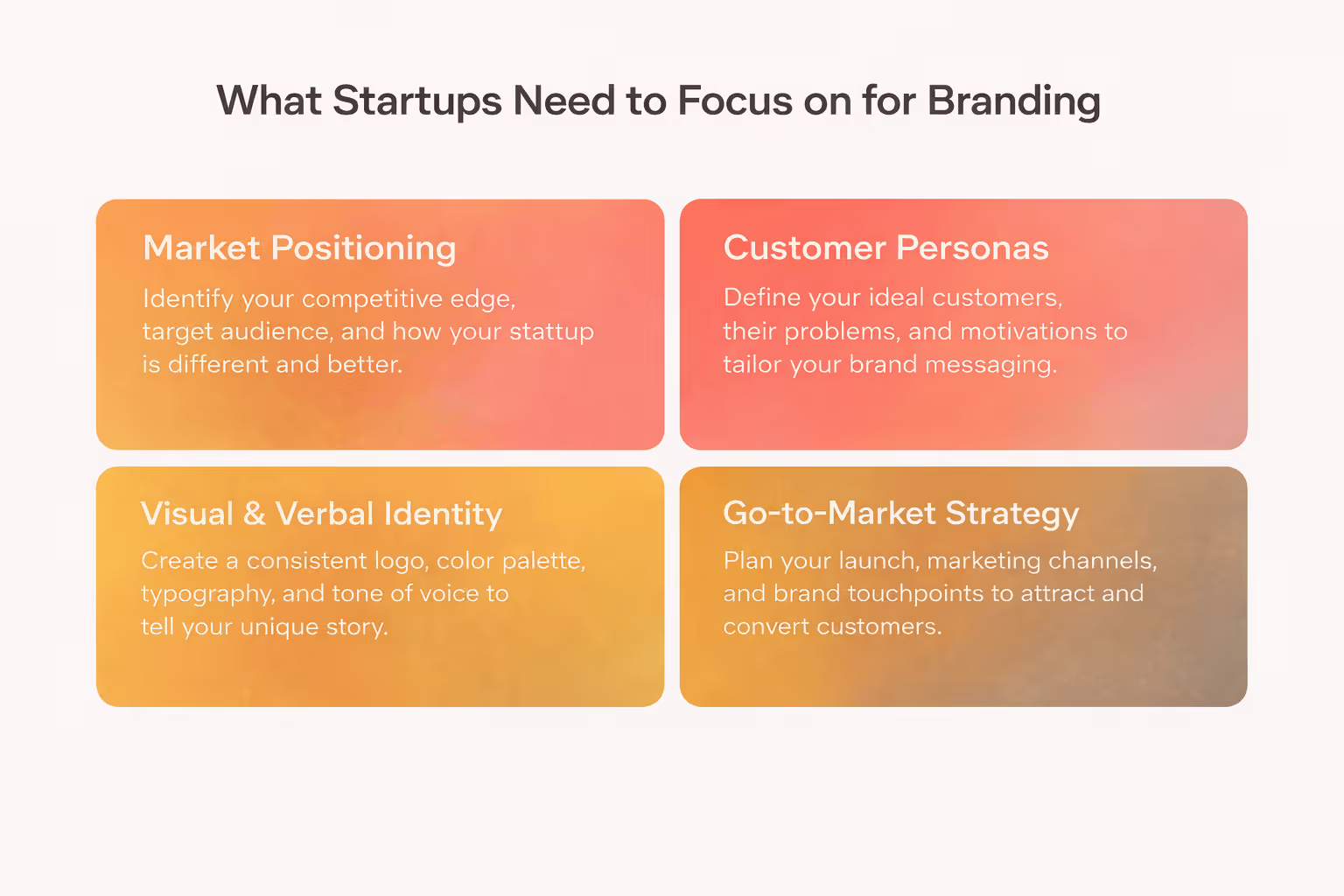
Every effective startup brand rests on three pillars: positioning, messaging, and identity. Skip any one, and the whole structure wobbles.
Positioning: Your Strategic Foundation
Positioning defines your place in the market and in the customer's mind. It answers: when someone needs what you offer, why should they think of you?
Arielle Jackson, who led marketing at Square and worked with hundreds of startups as Marketer in Residence at First Round Capital, developed a positioning formula based on her time at Google:
For (target customer) Who (statement of need or opportunity), (Product name) is a (product category) That (statement of key benefit). Unlike (competing alternative),(Product name) (statement of primary differentiation).
This framework forces clarity. You can't fill it in with vague language — it demands specifics. Who exactly is your customer? What category do you compete in? What's different about you?
Jackson's advice to founders:
"Nailing down your positioning from the beginning makes everything else easier. It all starts with nailing down your positioning. Everything stems from that."— Arielle Jackson, First Round Capital
Strong positioning makes every subsequent decision simpler. What features to build? Check positioning. What messaging to use? Check positioning. Which customers to pursue? Check positioning. It's the filter through which all brand decisions flow.
Y Combinator reinforces this in their Startup Library: the best companies can explain what they do in one sentence. If you can't, your positioning isn't clear enough.
Messaging translates positioning into language your audience actually uses and understands. It includes:
Value proposition: The core promise you make to customers. One sentence that captures why you exist and what you deliver.
Key messages: The 3-5 supporting points that prove your value proposition. These become the backbone of your website copy, pitch decks, and sales conversations.
Tone of voice: How you sound. Formal or casual? Technical or accessible? Confident or humble? The tone should match your audience's expectations and your brand's personality.
Proof points: Evidence that backs up your claims. Customer results, technical benchmarks, team credentials, investor backing — whatever makes your promises credible.
The best startup messaging feels inevitable. When you read it, you think: "Of course. That's exactly what this company should say." That feeling of inevitability comes from deep alignment between positioning, audience understanding, and language choices.
Look at how Stripe describes itself: "Financial infrastructure for the internet." Seven words that capture exactly what they do, who they serve, and their ambition. That's not accidental — it's the result of rigorous messaging work.
Identity: How You Show Up Visually
Identity is where strategy becomes visible. It's the logo on your pitch deck, the colors on your website, the typography in your product UI.
Effective startup identity systems share common traits:
Distinctive: They don't look like every other startup in the category. In a sea of blue SaaS logos with generic sans-serif fonts, distinctiveness is a competitive advantage.
Flexible: They work across contexts — from a 16px favicon to a conference booth backdrop. Early-stage startups can't predict every application, so the system needs room to stretch.
Scalable: They hold up as the company grows. The identity that works for a 5-person startup should still work at 500 people, perhaps with extensions but not wholesale replacement.
Cohesive: Every element feels like it belongs to the same family. Colors, typography, imagery, iconography — they should reinforce each other, not compete.
Neumeier emphasizes that visual identity isn't about personal taste:
"A charismatic brand includes a dedication to aesthetics. Why? Because it's the language of feeling, and in a society that's information-rich and time-poor, people value feeling more than information."— Marty Neumeier, The Brand Gap
Your identity creates feeling before your messaging creates understanding. People see your brand before they read your copy. That first visual impression shapes everything that follows.
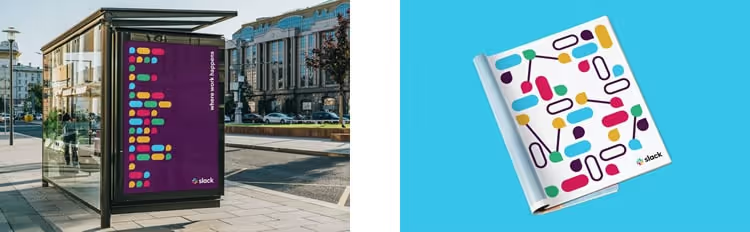
Agencies like Pentagram (the world's largest independent design consultancy, founded in 1972) and Koto have built iconic visual identities for tech companies from Slack to Robinhood. The common thread: visual choices grounded in strategic thinking, not aesthetic trends.
B2B vs. B2C Startup Branding: Key Differences
Not all startup brands work the same way. The dynamics differ significantly between B2B and B2C contexts.
B2C Startup Branding
Consumer brands operate in high-volume, low-touch environments. Key characteristics:
Emotional resonance matters most. Consumers make quick decisions based on feeling. Your brand needs to create instant emotional connection — trust, excitement, aspiration, belonging.
Visual impact is critical. Consumer brands compete for attention in crowded feeds, shelves, and search results. Bold, distinctive visuals cut through noise.
Consistency builds recognition. Consumers encounter your brand across dozens of touchpoints. Every inconsistency erodes the mental real estate you've built.
Speed of judgment is fast. A consumer might spend 3 seconds deciding whether to click, scroll past, or engage. Your brand has to communicate value almost instantly.
Agencies like Red Antler built their reputation on consumer startup brands — Casper, Allbirds, Hims & Hers — where emotional resonance and visual boldness drive growth.
B2B Startup Branding
Business brands operate in lower-volume, higher-stakes environments. Key characteristics:
Credibility matters most. B2B buyers are spending company money, often with career risk attached. Your brand needs to signal competence, stability, and trustworthiness.
Content depth builds trust. Business buyers research extensively before engaging sales. Your brand expresses through thought leadership, case studies, and detailed product information — not just visuals.
Multiple stakeholders decide. A B2B purchase might involve 6-10 decision-makers. Your brand needs to resonate with technical evaluators, business buyers, and executive sponsors — each with different concerns.
Speed of judgment is slower but higher stakes. A B2B buyer might spend weeks evaluating options. Your brand has time to build credibility, but mistakes compound across a longer consideration period.
McKinsey research on industrial brands confirms brand matters just as much in B2B contexts: companies with strong B2B brands outperform weak-branded competitors by 20%. The mechanisms differ — credibility over emotion, depth over speed — but the impact is equally significant.
SaaS and Fintech: Where B2B and B2C Blur
Many modern startups occupy a middle ground. A fintech app might sell to consumers but require B2B-level trust signals (security, compliance, reliability). A SaaS product might target small businesses where decisions feel more consumer-like (single decision-maker, quick evaluation).
For these hybrid categories, effective startup branding blends approaches:
Consumer-grade visual polish and emotional appeal
B2B-level credibility signals and depth
Flexibility to speak to different audience segments
Consistent core identity that holds across contexts
The best fintech brands — Stripe, Revolut, Mercury — master this balance. They feel approachable and modern (consumer qualities) while projecting competence and security (B2B qualities). Agencies like Koto (who worked on Revolut's brand) and Ueno specialize in this intersection.
Why Most Startup Branding Fails
Understanding what brand is helps explain why so many startups get it wrong. The failure patterns are predictable:
Starting with visuals, not strategy. A founder hires a designer before clarifying positioning. The result: a pretty logo attached to nothing. When messaging work happens later, it doesn't match the visual direction. The brand feels disjointed.
Copying competitors instead of differentiating. A startup looks at category leaders and mimics their approach. The result: a brand that feels generic, interchangeable with ten other options. No reason for customers to remember you specifically.
Chasing trends instead of building foundations. A startup adopts whatever aesthetic is popular — gradients this year, minimalism next year. The result: a brand that dates quickly and requires constant updating.
Skipping the hard positioning work. A startup can't articulate who they're for or why they're different. The result: vague messaging that tries to appeal to everyone and resonates with no one.
Treating brand as a one-time project. A startup does brand work at launch, then neglects it. The result: drift. Without active stewardship, brands erode through inconsistent execution and uncoordinated decisions.
Neumeier captures the core challenge:
"The central problem of brand-building is getting a complex organization to execute a simple idea."— Marty Neumeier, The Brand Gap
Even a small startup is complex enough to fragment a brand. Different team members make different decisions. Without clear strategy and guidelines, entropy wins.
Paul Graham, co-founder of Y Combinator, observed a related pattern in startup naming:
"Whatever name you choose, be careful. Names stick. You need a way to refer to things, and whatever you call something rapidly becomes its name."— Paul Graham
The same applies to all brand decisions. Early choices — whether thoughtful or arbitrary — become entrenched. Better to be intentional from the start.
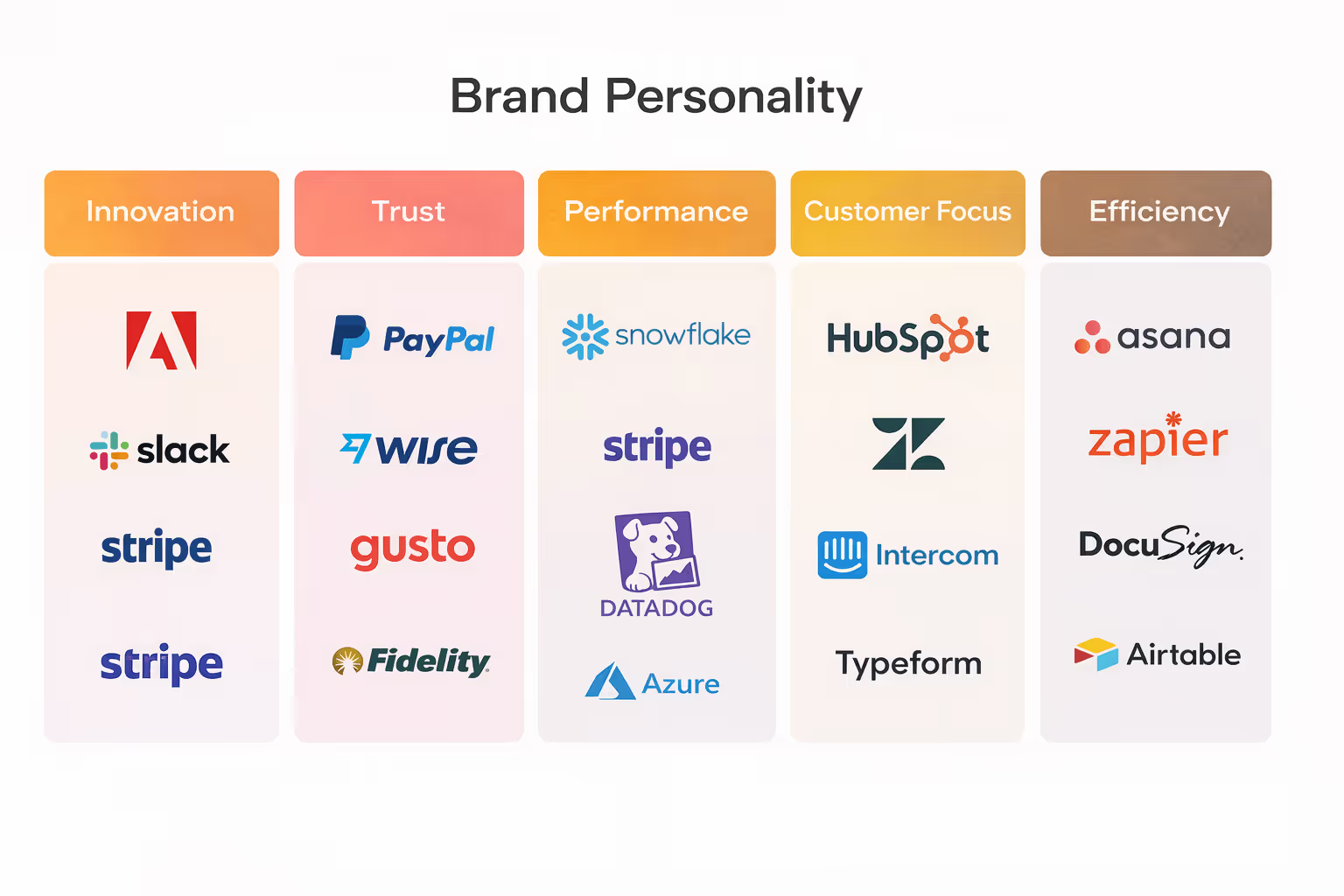
Charismatic Brand: Brand Personality by Metabrand
The Charismatic Brand: What to Aim For
Neumeier introduces a useful concept: the "charismatic brand."
"A charismatic brand is any product, service or company for which people believe there is no substitute."— Marty Neumeier, The Brand Gap
Think about that. Not "prefer" — believe there is no substitute. Apple users don't just prefer Apple; many genuinely can't imagine using anything else. Stripe users don't just like Stripe; switching feels almost unthinkable. Notion users build their entire workflows around it.
Charismatic brands share three characteristics:
A clear competitive stance. They know exactly what they stand for and what they stand against. There's no ambiguity about their position in the market.
A sense of rectitude. They operate with integrity. Their actions match their words. Customers trust them because they've earned it through consistent behavior.
A dedication to aesthetics. They care about how things look and feel. Every detail is considered. Quality is evident in execution.
Most startups won't achieve "charismatic brand" status in year one. But it's the right target. Every brand decision should move you closer to that north star: a brand so clear, so trusted, so well-executed that customers can't imagine an alternative.
"When the external actions of a company align with its internal culture, the brand resonates with authenticity."— Marty Neumeier, The Brand Gap
Authenticity can't be faked, but it can be cultivated. It starts with clarity about who you are — and the discipline to express that consistently.
Now that we understand what startup branding actually is, let's examine why it's worth the investment — with hard numbers.
The ROI of Startup Branding: Hard Numbers for Skeptical Founders
"Branding is a luxury we can't afford right now."
Every startup founder has said this — or thought it. When you're burning runway and racing to product-market fit, spending money on "brand stuff" feels irresponsible. Features ship. Branding doesn't.
Except that's wrong. The data is unambiguous: branding isn't a cost center. It's a multiplier. And the companies that treat it as an afterthought pay for that mistake in slower growth, higher customer acquisition costs, and eventually, failure.
B2B companies with strong brands outperform weak-branded competitors by 20%.
That's not a marginal difference. In competitive markets where companies fight for single-digit percentage gains, a 20% performance advantage is the difference between category leadership and also-ran status.
And this isn't just about consumer brands with Super Bowl budgets. McKinsey's findings apply specifically to B2B contexts — the exact environment where most tech startups operate. Enterprise SaaS, fintech infrastructure, developer tools — these categories show the same pattern.
The mechanism isn't mysterious. As Interbrand — the firm that pioneered brand valuation methodology in 1988 — puts it:
"Strong brands influence customer choice and create loyalty; attract, retain, and motivate talent; and lower the cost of financing."
Each of these effects compounds. Customers choosing you over competitors means higher win rates. Loyalty means lower churn and higher lifetime value. Attracting talent means better execution. Lower financing costs mean more runway. Strong brands don't just perform better — they create virtuous cycles that accelerate over time.
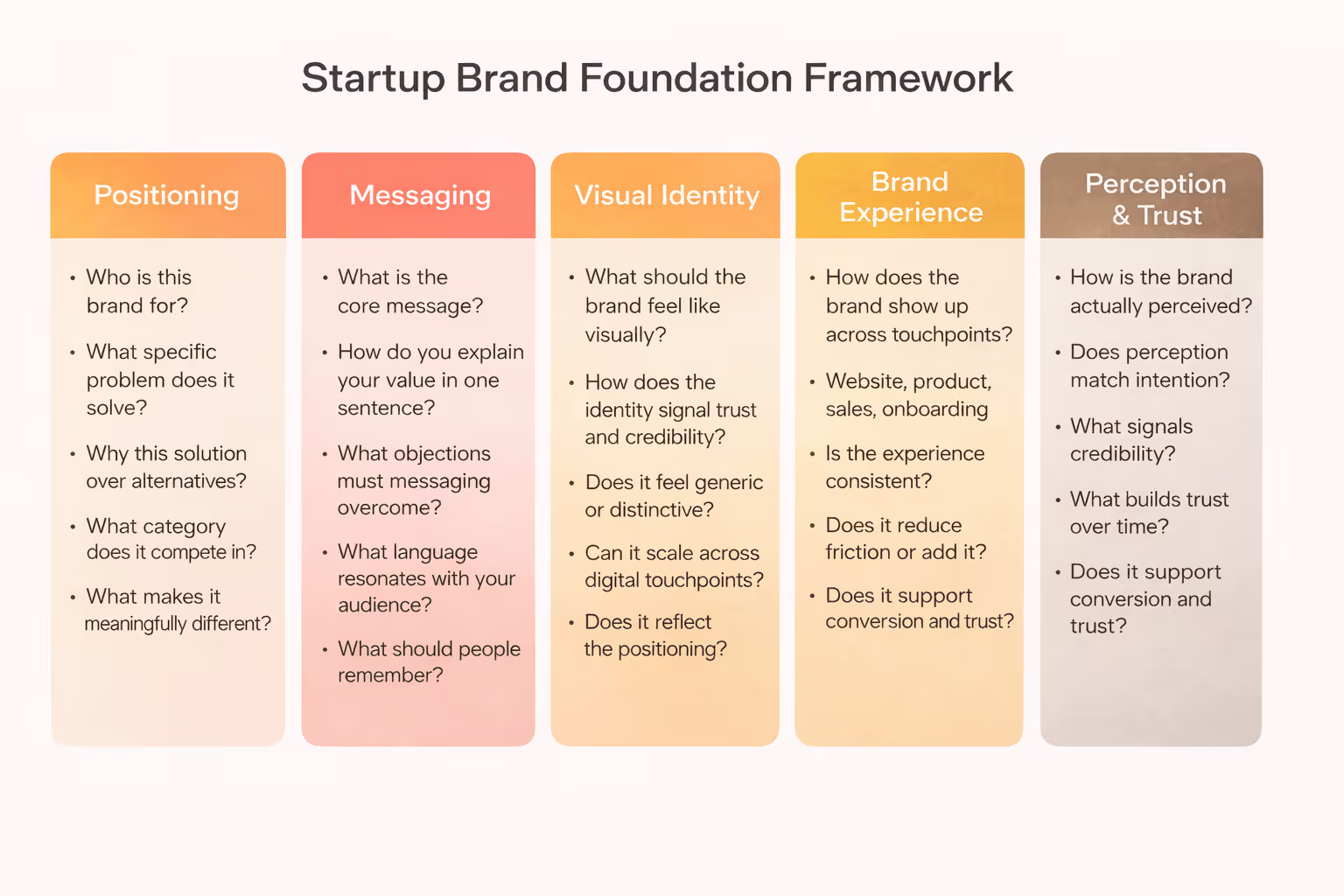
Marketing Efficiency: Startup Brand Foundation Framework by Metabrand
Marketing Efficiency: Do More With Less
For cash-constrained startups, the efficiency argument might be even more compelling than raw performance.
"Companies report marketing efficiency gains of up to 30 percent and incremental top-line growth of up to 10 percent without increasing the marketing budget."
Read that again. 30% efficiency gains. 10% revenue growth. Same budget.
For a startup spending $100K/month on marketing, that's the equivalent of finding an extra $30K — without writing a bigger check. For a company doing $10M ARR, that's $1M in additional revenue from existing spend.
How does this work? Strong brands reduce friction at every stage of the funnel. Prospects who recognize and trust your brand convert faster. Sales cycles shorten. Customer acquisition cost drops. Paid media performs better when it's backed by brand recognition. Organic word-of-mouth amplifies paid efforts.
Weak brands have to brute-force every conversion. Strong brands benefit from accumulated trust that makes each marketing dollar work harder.
The Trillion-Dollar Underinvestment
If branding delivers such clear returns, why do so many companies underinvest?
Brands have missed out on $3.5 trillion of unrealized value due to short-term thinking and underinvestment in brand.
$3.5 trillion. That's not a typo. Interbrand's analysis of the world's most valuable brands — companies like Apple, Google, Amazon, and Microsoft — shows that even sophisticated organizations systematically underinvest in brand building.
The top 100 global brands are now valued at $3.4 trillion collectively, representing 3.4x growth since 2000. But Interbrand's modeling suggests this number could be nearly double if companies had invested appropriately in brand over the past two decades.
For startups, the implication is clear: the opportunity cost of neglecting brand compounds over time. The best time to invest was yesterday. The second-best time is now.
Pricing Power: The 13% Premium
Strong brands don't just win more deals — they win better deals.
Research from Millward Brown (now part of Kantar) found that strong brands command a 13% price premium over weak brands.
In SaaS terms, that's the difference between $99/month and $112/month. At scale, it's millions in additional annual revenue from the exact same product.
This pricing power comes from perceived value, not features. Two products can be functionally identical, but the one with stronger brand commands higher prices because customers believe it's worth more. That belief is the brand at work.
Consider Stripe vs. generic payment processors. Notion vs. other note-taking apps. Figma vs. other design tools. In each case, the category leader charges premium prices not because their product is dramatically superior, but because their brand carries weight. Customers trust them more. Switching feels riskier. The premium feels justified.
Siegel+Gale, the brand strategy consultancy, found a related effect: 63% of customers are willing to pay more for simpler experiences. Brand clarity — knowing exactly what a company stands for and what to expect — is itself a form of value that customers will pay for.
The CFO Problem (And Why It Matters)
Here's an uncomfortable truth from McKinsey's research:
45% of CFOs say marketing proposals were declined because they didn't demonstrate clear line to value.
Nearly half of all marketing investment requests get rejected because finance teams can't see the ROI. Branding proposals are particularly vulnerable because the returns are harder to attribute than, say, performance marketing spend.
This creates a vicious cycle. Brand investments get cut because they're hard to measure. The brand weakens. Marketing efficiency drops. More performance spend is needed to compensate. Budgets get squeezed. Brand investments get cut further.
Smart founders break this cycle by framing brand investment in terms CFOs understand. Not "we need better brand awareness" but "we need to reduce CAC by 20%." Not "our visual identity is outdated" but "we're losing deals because prospects don't trust us."
The data exists to make these arguments. McKinsey, Interbrand, and academic researchers have done the work. Founders just need to translate it into financial language.
A rigorous study published in ScienceDirect examined the stock performance of Interbrand's most valuable brands from 2000 to 2018, using the Fama-French model — the gold standard for academic finance research. The findings were striking:
A portfolio of strong brands significantly outperformed the market over 18 years. The outperformance was much larger during bear markets than normal periods.
This last point deserves emphasis. Strong brands don't just perform well when times are good — they provide downside protection when times are bad. During recessions, market downturns, and crises, customers retreat to brands they trust. Companies with weak brands see demand evaporate; companies with strong brands maintain their position.
For startups planning to exist for decades, this durability matters as much as short-term growth. Economic cycles are inevitable. The brands that survive downturns are the ones that invested in trust before they needed it.
McKinsey's data confirms this: strong brands generate 31% more shareholder returns than the MSCI World average. For founders thinking about eventual exits — whether through IPO, acquisition, or long-term ownership — brand equity directly affects valuation.
What This Means for Startups
The research points to clear conclusions:
Brand is not a luxury. The 20% performance gap, 30% efficiency gains, and 13% price premium are available to companies that invest. They're foregone by companies that don't.
Early investment compounds. Interbrand's $3.5 trillion in unrealized value represents decades of underinvestment. Startups that build brand from the beginning accumulate advantages that late-movers can't easily replicate.
The CFO argument is winnable. Frame brand investment in financial terms — CAC reduction, conversion improvement, pricing power, talent acquisition cost — and the numbers make the case.
Downside protection is real. Strong brands survive downturns better. In a startup environment where 90% of companies fail and access to capital fluctuates, resilience is valuable.
None of this means you should spend your seed round on a $500K rebrand. Brand investment should be proportional to stage and resources. But the idea that brand is a "later" problem — something to address after product-market fit, after Series B, after you're "big enough" — is contradicted by every serious study of the question.
Brand investment isn't instead of product development or growth marketing. It's what makes those investments work better.
The Real Cost of Waiting
Consider a thought experiment. Two identical startups launch in the same category. Both have good products, good teams, reasonable funding. The only difference:
Startup A invests in brand from day one — clear positioning, professional identity, consistent messaging.
Startup B defers brand work — generic visual identity, unclear positioning, inconsistent messaging.
After two years, McKinsey's data suggests Startup A will have:
20% better market performance
30% more efficient marketing spend
Stronger talent pipeline (candidates prefer established brands)
Startup B, meanwhile, has been burning cash on inefficient marketing, losing deals to better-positioned competitors, and struggling to hire because their company feels "generic."
The gap isn't theoretical. It's the difference between the Y Combinator companies that break out — Stripe, Airbnb, Coinbase, Figma — and the thousands that raised similar amounts but never achieved escape velocity.
As Interbrand's research shows, brands account for more than 30% of the stock market value of S&P 500 companies. For startups aspiring to that scale, brand isn't a nice-to-have. It's nearly a third of the eventual enterprise value.
The question isn't whether to invest in brand. It's how much value you're willing to leave on the table by waiting.
Now that we've established why brand investment pays off, let's get practical: how do you actually build a startup brand?
How to Build a Startup Brand: A Step-by-Step Process
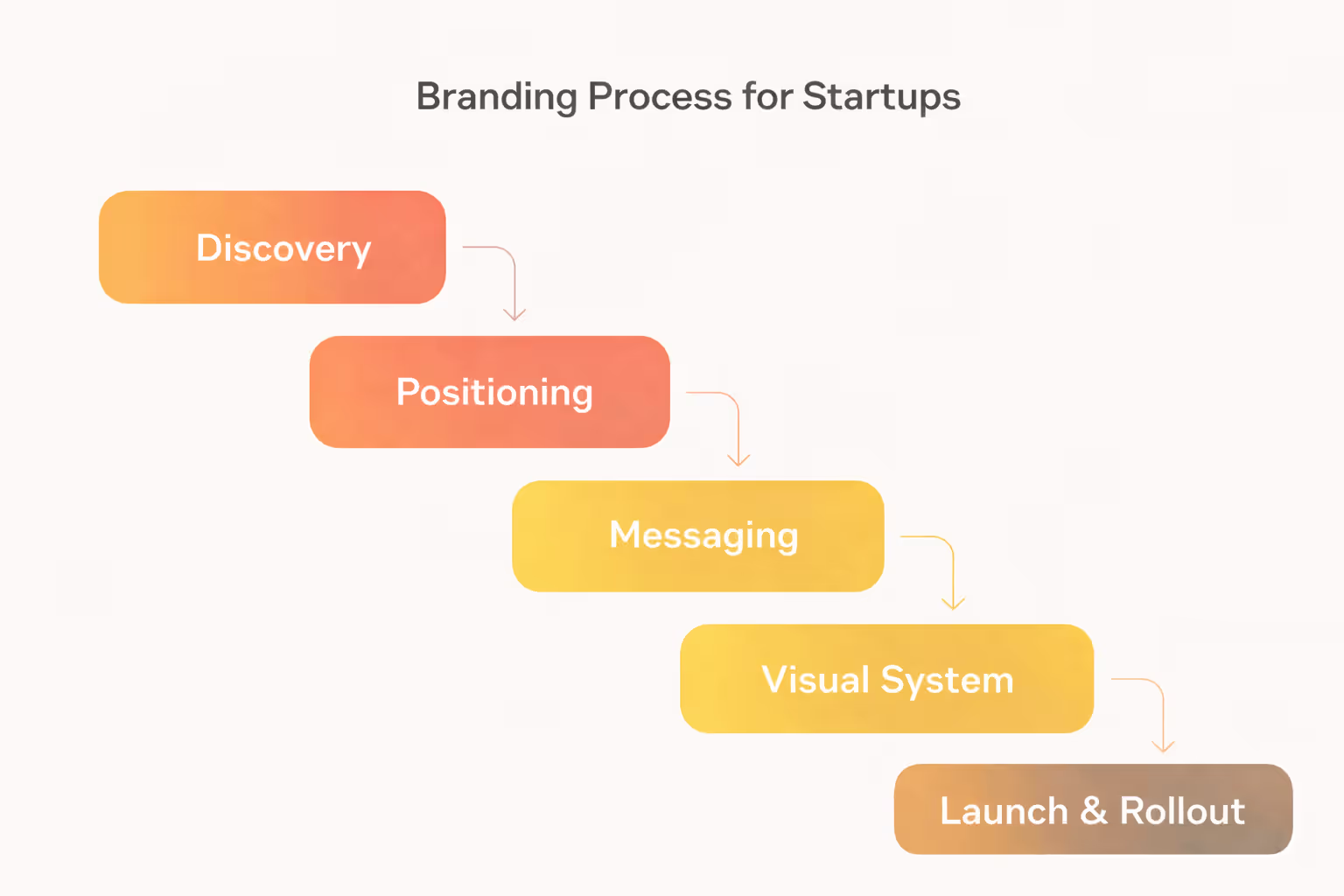
Branding Process for Startups by Metabrand
Theory is useful. Process is what ships.
This section walks through exactly how to build a startup brand — from initial research through final execution. It's the methodology used by top agencies like Landor, Pentagram, and Wolff Olins, adapted for startup timelines and budgets.
The process has five phases: Discovery, Strategy, Verbal Identity, Visual Identity, and Activation. Skip any phase and the foundation cracks. Rush through and you'll rebuild later at 10x the cost.
Phase 1: Discovery — Understanding Before Creating
Every branding failure traces back to the same root cause: building on assumptions instead of understanding.
Discovery is the research phase. You're gathering inputs that will inform every decision downstream. Skip it and you're guessing. Invest in it and every subsequent phase moves faster.
Stakeholder Interviews
Start inside. Interview founders, executives, and key team members. You're looking for:
Vision alignment (or misalignment). Do the founders agree on where the company is going? Disagreements surface now, not during logo reviews.
Origin story. Why does this company exist? What problem made the founders angry enough to quit their jobs and start something? The emotional core of the brand often lives here.
Competitive perception. How do insiders see the competitive landscape? Who do they respect? Fear? Dismiss? Their mental map reveals positioning opportunities.
Culture and values. What behaviors get rewarded? What would get someone fired? Culture shapes brand from the inside out.
"Company purpose: Start here — define your company in a single declarative sentence. This is harder than it looks."
If founders can't articulate purpose clearly in interviews, the brand work ahead will be harder. Discovery surfaces this gap early.
Customer Research
Internal perspectives matter, but customers have the final vote. Research should include:
Interviews with current customers. Why did they buy? What alternatives did they consider? What almost stopped them? What words do they use to describe you?
Interviews with churned customers. Why did they leave? What was missing? Where did you fail to deliver on promises?
Interviews with prospects who didn't convert. What stopped them? How did they perceive you vs. competitors? What would have changed their mind?
Review mining. If you have G2, Capterra, or Trustpilot reviews, analyze them systematically. What themes emerge? What language do customers use repeatedly?
The goal isn't to ask customers what your brand should be — that's your job. The goal is to understand how they think, what they value, and what language resonates.
Competitive Analysis
Map your competitive landscape systematically:
Direct competitors. Companies selling similar products to similar customers. How do they position? What visual and verbal patterns define the category?
Indirect competitors. Alternative solutions to the same problem. A project management startup competes with other PM tools, but also with spreadsheets, email, and "we'll just figure it out."
Aspirational references. Brands outside your category that you admire. What makes them effective? What principles could translate?
Look for white space. If every competitor in your category uses blue, that's information. If they all emphasize "ease of use," that's information. Category conventions reveal positioning opportunities — either to align with expectations or deliberately break them.
Market and Trend Analysis
Understand the broader context:
Category trajectory. Is your market growing, shrinking, consolidating? What forces are reshaping it?
Regulatory environment. Especially for fintech, healthtech, and other regulated categories — compliance shapes brand possibilities.
Cultural shifts. What broader trends affect how your audience thinks? Remote work, AI anxiety, economic uncertainty — these shape receptivity to different messages.
Technology changes. New platforms, new behaviors, new expectations. Brand must work across contexts that may not exist yet.
Discovery typically takes 2-4 weeks depending on company complexity and research depth. The output is a research synthesis document that the entire team aligns on before strategy begins.
Phase 2: Strategy — Making the Hard Choices
Strategy is where you make decisions. What to be. What not to be. Who you're for. Who you're not for.
This phase produces the foundational documents that guide everything else: positioning, brand architecture, and brand platform.
"It all starts with nailing down your positioning. Everything stems from that."
The classic positioning framework, developed by Al Ries and Jack Trout and refined by practitioners like Jackson, follows this structure:
For (target customer) Who (statement of need or opportunity),(Product name) is a (product category) That (statement of key benefit). Unlike (competing alternative), (Product name) (statement of primary differentiation).
Every element requires hard choices:
Target customer. Not "everyone who might buy" — the specific segment you're optimizing for. Stripe chose developers. Notion chose teams who wanted flexibility. Linear chose engineering teams who cared about speed. Narrow focus enables sharp positioning.
Category. What mental bucket do you occupy? Sometimes you create a new category. Sometimes you redefine an existing one. Sometimes you own a slice of a large category. The choice affects how customers discover and evaluate you.
Key benefit. The primary value you deliver. Not a feature list — the outcome customers care about. Superhuman isn't "email with keyboard shortcuts." It's "the fastest email experience ever made."
Primary differentiation. What makes you unlike alternatives? This is the hardest line to write because it requires honest assessment of what's actually different, not what you wish were different.
Jackson's advice to founders:
"You need to position your product in the mind of your user. And that requires taking your potential users into account, assessing the product's strengths and weaknesses, and considering your competition."
Positioning isn't aspirational. It's a clear-eyed statement of the space you can credibly own.
Brand Architecture
For startups with multiple products, services, or sub-brands, architecture decisions matter:
Monolithic (branded house). Everything lives under one brand. Google products are all Google: Google Maps, Google Drive, Google Docs. Simpler, but constrains how different products can feel.
Endorsed. Sub-brands have their own identity but connect to a parent. Marriott hotels: Courtyard by Marriott, Residence Inn by Marriott. Flexibility with credibility transfer.
Pluralistic (house of brands). Independent brands under one corporate umbrella. Procter & Gamble owns Tide, Pampers, Gillette — each with distinct identities. Maximum flexibility, maximum complexity.
Most early-stage startups should default to monolithic. You don't have the brand equity to transfer, and managing multiple brands dilutes focus. Architecture complexity is a later-stage problem.
Brand Platform
The brand platform synthesizes strategy into a usable framework. Components typically include:
Purpose. Why the company exists beyond making money. Not a tagline — the foundational reason.
Vision. The future state you're working toward. What the world looks like if you succeed.
Mission. How you pursue the vision. What you do daily.
Values. The principles that guide behavior. Not aspirational posters — actual decision-making criteria.
Personality. Human characteristics that define how the brand shows up. Are you serious or playful? Authoritative or approachable? Technical or accessible?
Brand essence. The single idea at the heart of everything. If the brand were a person, what would they be known for?
This document becomes the source of truth. When debates arise about messaging or visuals, the platform provides answers. Without it, every decision becomes a new argument.
Phase 3: Verbal Identity — Finding Your Voice
With strategy locked, verbal identity translates positioning into language.
Naming (If Needed)
For startups that need a new name — whether launching or rebranding — naming is a distinct discipline.
"If you have a US startup called X and you don't have x.com, you should probably change your name. The problem with not having the .com of your name is that it signals weakness."
The data backs this up: 100% of the top 20 YC companies by valuation have their .com domain. 94% of the top 50.
"The best kind of names are the ones that are both cool words and refer to what the company does. The second grade of names are merely cool words. The next grade of names are ones that are mediocre but not actively repulsive."
And a crucial warning:
"Whatever name you choose, be careful. Names stick. You need a way to refer to things, and whatever you call something rapidly becomes its name."
Good startup names share characteristics: memorable, easy to spell, easy to pronounce, available as a domain, trademarkable. The process involves generating hundreds of candidates, filtering ruthlessly, and conducting thorough availability checks before falling in love with any option.
Messaging Framework
The messaging framework translates positioning into specific language for different audiences and contexts:
Value proposition. The core promise in one sentence. What you deliver and why it matters.
Elevator pitch. 30-second explanation for casual contexts. Clear enough for anyone to understand.
Key messages. 3-5 supporting points that prove your value proposition. Each should be a complete thought that stands alone.
Proof points. Evidence for each key message. Customer results, technical capabilities, team credentials, investor backing.
Audience-specific messaging. How key messages flex for different segments. Technical buyers care about different things than business buyers.
Objection handling. Pre-emptive responses to common concerns. Price, switching costs, competitive alternatives.
The framework ensures consistency without rigidity. Different team members can craft contextually appropriate messages while staying aligned on core themes.
Tone of Voice
Tone of voice defines how the brand sounds:
Dimensions. Where does the brand fall on key spectrums? Formal vs. casual. Technical vs. accessible. Confident vs. humble. Serious vs. playful.
Do's and don'ts. Specific guidance on language choices. Words to use, words to avoid. Punctuation preferences. Emoji policy.
Examples. Before/after rewrites showing tone in action. Abstract guidelines become concrete through demonstration.
Channel adaptation. How tone flexes across contexts. Website copy vs. support tickets vs. social media vs. legal documents.
Tone documentation should be specific enough to be useful. "We're friendly but professional" doesn't help anyone write. "We use contractions, avoid jargon, and always explain technical concepts in plain language" does.
Phase 4: Visual Identity — Making Strategy Visible
Visual identity translates strategy into design. It's what most people think of as "branding" — but it's actually the fourth phase, not the first.
Logo Development
The logo is the most visible brand element, but it's not the most important. A mediocre logo with strong strategy beats a beautiful logo with no strategic foundation.
That said, effective startup logos share characteristics:
Simplicity. Works at small sizes (favicon, app icon) and large (trade show booth). Complex logos break at extremes.
Distinctiveness. Stands out from category conventions. If every competitor has an abstract geometric mark, consider a wordmark. If everyone uses wordmarks, consider a symbol.
Versatility. Works in color and black/white, on light and dark backgrounds, in horizontal and stacked formats. Modern brands need responsive logo systems, not single static marks.
Timelessness. Avoids trends that will date quickly. The logos that last decades share a certain restraint.
Agencies like Pentagram (the world's largest independent design consultancy, founded in 1972), Collins, and Koto have created logos for companies from Mastercard to Discord to Slack. The common thread: rigorous process grounded in strategy, not aesthetic whim.
Color System
Color carries emotional weight and aids recognition. The system should include:
Primary palette. 1-3 colors that define the brand's visual presence. These do the heavy lifting across most applications.
Secondary palette. Supporting colors for variety and hierarchy. Extend the primary palette without overwhelming it.
Functional colors. UI-specific colors for success, error, warning states. These serve usability, not brand expression.
Accessibility considerations. Color combinations that meet WCAG contrast requirements. Brand colors that don't work for accessibility need adjustment.
Usage ratios. Guidance on proportions. A 60/30/10 rule or similar to ensure consistency across applications.
Color choices should connect to strategy. Why these colors? What do they communicate? Blue signals trust (overused in fintech, but for a reason). Green signals growth or sustainability. Black signals sophistication. Arbitrary color choices disconnect identity from strategy.
Typography
Typography shapes how the brand feels when read:
Primary typeface. The workhorse for most applications — headlines, body copy, UI. Should be highly legible and available in multiple weights.
Secondary typeface. For contrast and hierarchy. Might pair a sans-serif primary with a serif secondary, or a geometric sans with a humanist sans.
Type scale and hierarchy. Specific sizes and weights for headings, subheadings, body text, captions. Consistency requires rules.
Web font considerations. Performance, licensing, and fallback stacks. Beautiful typography that slows page load is bad typography.
The best startup typography choices balance distinctiveness with usability. Custom typefaces (like Netflix Sans or Apple's San Francisco) signal investment but require significant budget. High-quality commercial or open-source fonts can achieve excellent results for early-stage companies.
Additional Visual Elements
A complete visual system extends beyond logo, color, and type:
Iconography. Custom icon style or curated icon library. Icons should feel like they belong to the same family.
Illustration style. If the brand uses illustration, what's the approach? Geometric or organic? Flat or dimensional? Human characters or abstract?
Photography direction. Subject matter, composition, color treatment, mood. Stock photography selection or custom shoot guidelines.
Motion principles. How does the brand move? Easing curves, timing, transitions. Increasingly important as brands exist in motion-rich environments.
Data visualization. Charts, graphs, dashboards. How does the brand present information visually?
Every element should ladder back to the brand platform. If the brand personality is "precise and technical," illustration style should reflect that. If it's "warm and approachable," photography should show real humans in natural contexts.
Brand Guidelines
All visual (and verbal) decisions get documented in brand guidelines:
Living document. Digital-first, easily updateable. PDF guidelines become outdated immediately.
Clear hierarchy. What's mandatory vs. flexible vs. just guidance. Not everything needs equal weight.
Abundant examples. Show the system in context. Real applications demonstrate rules better than abstract specifications.
Anti-examples. Show what not to do. "Don't stretch the logo" with visual demonstration of stretched logo.
Asset access. Links to logo files, font files, template files. Guidelines without assets are useless.
Modern teams increasingly use tools like Frontify, Zeroheight, or Notion for living brand documentation that stays current as the system evolves.
Phase 5: Activation — Bringing Brand to Life
A brand that exists only in guidelines is worthless. Activation deploys the brand across touchpoints where it meets audiences.
Priority Touchpoints
For most startups, the highest-impact touchpoints are:
Website. Often the first impression. Should fully embody new brand within days of launch.
Product UI. Where customers spend the most time. Brand consistency here builds trust.
Pitch deck. For fundraising and sales. Professional brand elevates every presentation.
Social profiles. High visibility, frequently viewed. Easy quick win.
Email templates. Transactional and marketing emails. High-volume touchpoint.
Sales collateral. One-pagers, case studies, proposals. Where brand meets buying decisions.
Create a prioritized rollout plan. Not everything updates day one. Focus on highest-impact, highest-visibility touchpoints first.
Internal Launch
Brand launches fail when teams don't understand or buy into the new direction. Internal launch should include:
Launch presentation. Walk the team through strategy, not just visuals. Help them understand why decisions were made.
Q&A session. Let people ask questions. Address concerns openly. Resistance often stems from misunderstanding.
Practical training. How to use new tools, templates, assets. Reduce friction for adoption.
Champions network. Identify brand advocates across teams. Peer influence drives adoption better than top-down mandates.
Feedback channels. Create ways for teams to surface problems and suggestions. Living brands improve through use.
External Launch
External launch strategy depends on context:
Big bang. Launch everything simultaneously with significant announcement. Works for rebrands where the change itself is newsworthy.
Rolling transition. Update touchpoints progressively without formal announcement. Works when you want seamless evolution, not disruption.
Hybrid. Quiet rollout followed by announcement once everything is updated. Avoids the awkward period of mixed brand applications.
Consider:
Press and media. Is this newsworthy beyond your existing audience? Rebrands can generate coverage if positioned well.
Customer communication. Existing customers deserve context. Explain what changed and why, especially if product UI looks different.
Partner notification. Companies that co-market with you need updated assets. Give them advance notice and easy access.
Ongoing Brand Management
Brand isn't a project — it's a practice. Ongoing management includes:
Governance. Who approves what? Clear decision rights prevent brand erosion through inconsistent execution.
Asset management. Keep files organized, current, and accessible. Teams use what they can find.
Regular audits. Quarterly or annual review of brand consistency across touchpoints. Drift happens without active monitoring.
Feedback loops. How does brand performance data — recognition, sentiment, consistency — inform evolution?
Evolution process. Brands change over time. How do you handle updates, extensions, and refinements without full rebrand?
"The central problem of brand-building is getting a complex organization to execute a simple idea."
Even small startups are complex enough to fragment brand consistency. Active management is how you maintain coherence as the company scales.
Timeline and Budget Considerations
Realistic expectations for startup branding:
Timeline.
Discovery: 2-4 weeks
Strategy: 2-3 weeks
Verbal Identity: 2-4 weeks
Visual Identity: 4-8 weeks
Activation: 4-8 weeks (overlapping with visual)
Total: 3-6 months for comprehensive brand development. Faster is possible but increases risk. Slower is sometimes necessary for complex organizations.
Budget.
Startup branding costs vary enormously based on agency, scope, and company stage:
Seed stage: $15K-50K (focused scope, emerging agency or freelance talent)
Series A: $50K-150K (comprehensive brand, established boutique agency)
Series B+: $150K-500K+ (full brand overhaul, top-tier agency, extensive activation)
These ranges exclude activation costs (website redesign, collateral production, etc.) which often equal or exceed the core brand development investment.
The question isn't "what does branding cost?" but "what's the right investment for our stage?" Underspending leaves value on the table. Overspending diverts resources from other priorities.
Common Mistakes and How to Avoid Them
Mistake: Skipping discovery. Building on assumptions leads to brands that don't resonate.Fix: Invest in research. Even lightweight discovery (10 customer interviews, competitive analysis, stakeholder alignment) dramatically improves outcomes.
Mistake: Too many cooks. Brand-by-committee produces mediocrity.Fix: Small decision-making team (2-3 people) with clear authority. Gather input broadly, decide narrowly.
Mistake: Falling in love with concepts too early. The first idea is rarely the best idea.Fix: Explore multiple directions. Live with options before committing. Sleep on major decisions.
Mistake: Confusing differentiation with weirdness. Being different for its own sake isn't strategy.Fix: Differentiation must be meaningful to customers. "Different" that doesn't matter isn't valuable.
Mistake: Ignoring implementation realities. A beautiful brand that can't be executed is worthless.Fix: Consider who will use the brand. If your team can't execute complex guidelines, simplify the guidelines.
Mistake: Treating brand as done. Launch is the beginning, not the end.Fix: Budget for ongoing management. Plan for evolution. Build feedback loops.
Brand building is rigorous work. But the process, followed carefully, produces brands that last — brands that become genuine competitive advantages.
Next: recognizing when it's time to rebrand — and how to do it without destroying what you've built.
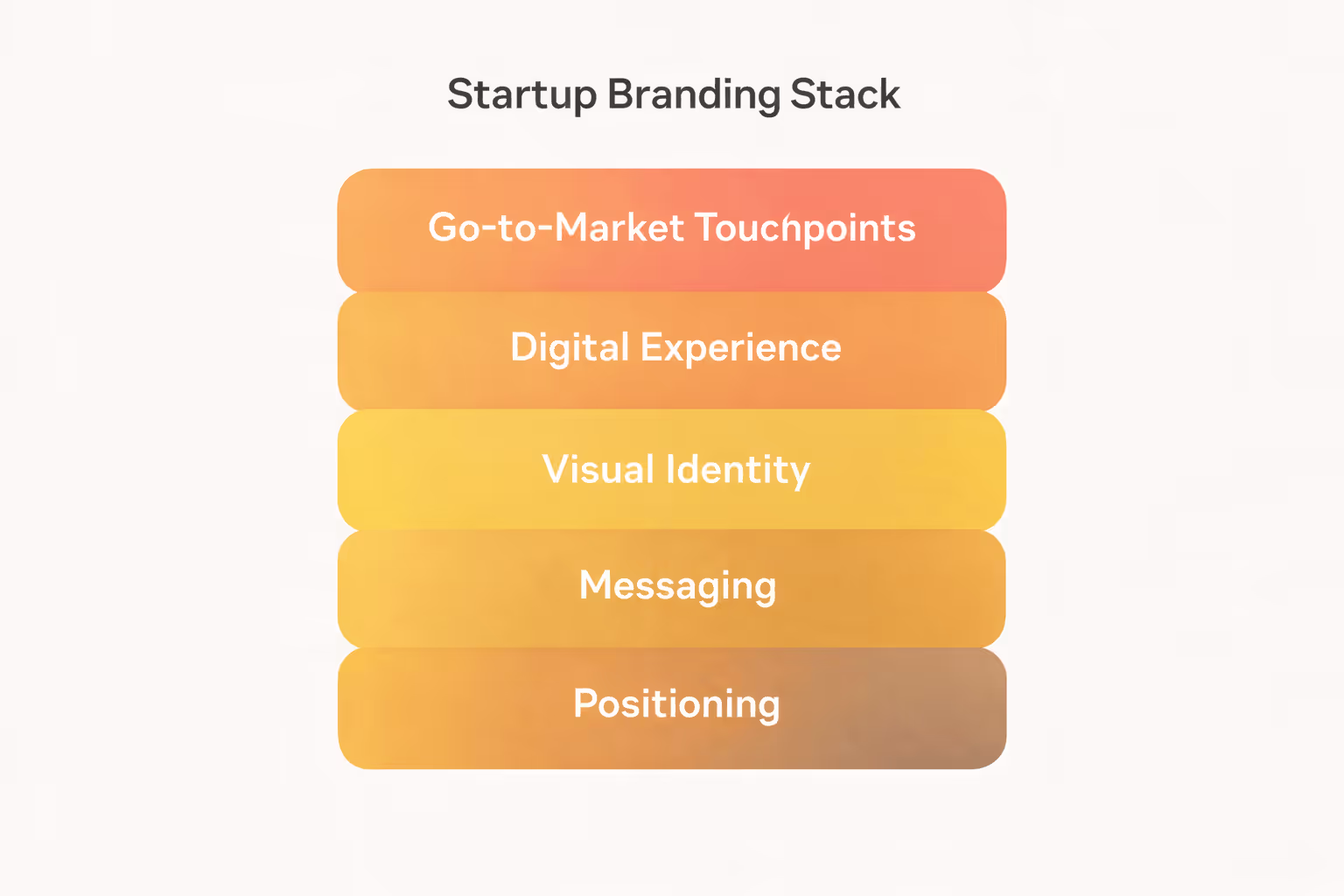
Startup Branding Stack by Metabrand
When to Rebrand: Signs, Risks, and How to Do It Right
Rebranding is surgery. Sometimes necessary. Always painful. Often botched.
The startup graveyard is filled with companies that rebranded at the wrong time, for the wrong reasons, or in the wrong way. But it's also filled with companies that needed to rebrand and didn't — clinging to identities that no longer served them until irrelevance set in.
This section helps you answer three questions: Should we rebrand? When should we rebrand? How do we rebrand without destroying what we've built?
The Two Types of Rebrand
Not all rebrands are equal. Understanding the spectrum helps calibrate the right response.
Brand Refresh
A refresh updates execution while preserving strategic foundation. The brand's positioning, personality, and core identity remain intact. What changes:
Visual modernization. Logo refinement (not replacement), updated color palette, contemporary typography. Mastercard's 2016 refresh simplified their iconic circles without abandoning recognition.
Messaging tightening. Clearer value proposition, sharper language, better audience alignment. Same story, told better.
System expansion. New elements to handle contexts the original system didn't anticipate. Motion design, icon libraries, illustration styles.
Consistency cleanup. Eliminating drift that accumulated over time. Getting back to the brand that was intended.
Refreshes are lower risk, lower cost, and faster to execute. They're appropriate when the strategic foundation is solid but the execution has dated or fragmented.
Full Rebrand
A full rebrand rethinks everything. Positioning shifts. Personality evolves. Visual identity transforms. Name might change. This is appropriate when:
Strategic foundation has cracked. The original positioning no longer fits market reality, competitive landscape, or company direction.
The brand actively hurts you. Negative associations, category confusion, or fundamental misalignment between perception and reality.
The company has fundamentally transformed. Through M&A, pivot, or evolution, you've become something the original brand can't contain.
Full rebrands are high risk, high cost, and slow to execute. They require careful justification because the downside — destroying accumulated brand equity — is severe.
Signs You Need a Rebrand
How do you know if it's time? These signals suggest the question deserves serious consideration.
Market Signals
You're consistently losing to competitors on perception, not product. Prospects choose alternatives even when your product is objectively better. Brand perception is the gap.
Your category has fundamentally shifted. What you do hasn't changed, but how the market thinks about the category has. Your brand was built for a context that no longer exists.
New competitors have reset expectations. A disruptor entered with modern brand execution, making everyone else look dated. The bar moved and you didn't move with it.
You can't command fair pricing. Despite strong product, you're forced to compete on price because the brand doesn't support premium positioning. As Millward Brown research shows, strong brands command 13% price premiums — weak brands leave that money on the table.
Geographic expansion reveals problems. The brand that worked in your home market doesn't translate. Name, messaging, or visual associations create barriers in new regions.
Internal Signals
You've outgrown the founder brand. Many startups launch with whatever the founder threw together. That worked at 5 people. It doesn't work at 50. The brand signals "amateur" when you need "established."
The brand doesn't match what you've become. Through product evolution, you've become a different company. The startup that was "simple project management for freelancers" is now "enterprise work platform for Fortune 500." The original brand can't stretch to fit.
Employees are embarrassed. When your team hesitates to share the website or uses workarounds to avoid branded materials, the brand is actively hurting recruitment and morale.
Every new initiative requires brand gymnastics. New products, new markets, new partnerships — each requires extensive rationalization because the brand wasn't built to accommodate them.
M&A integration demands it. You've acquired companies (or been acquired) and the brand portfolio is incoherent. Multiple identities confuse customers and dilute investment.
Customer Signals
Customers describe you differently than you describe yourself. The brand you think you have isn't the brand customers perceive. That gap, if large enough, indicates strategic misalignment.
You attract the wrong customers. Your brand appeals to segments you don't want to serve — low-value, high-churn, poor fit. The right customers self-select out because the brand doesn't speak to them.
Awareness without consideration. People know you exist but don't consider you for purchase. The brand has recognition but not relevance.
Confusion with competitors. Customers mix you up with other companies. Your brand lacks distinctive elements that create separation.
Signs You Don't Need a Rebrand
Equally important: recognizing when rebrand urges should be resisted.
You're bored with the brand. Internal fatigue isn't customer fatigue. You've seen the logo 10,000 times. Customers have seen it 10. Boredom is a terrible reason to rebrand.
New leadership wants to make a mark. Incoming executives often push for rebrands to signal change. But rebrands should serve strategy, not egos. The AOL-Time Warner merger rebrand didn't fix the underlying strategic mess.
Competitors rebranded. Someone else's rebrand doesn't obligate your response. If your brand still works, competitor moves might actually strengthen your differentiated position.
You want to fix business problems with branding. Brand can amplify good strategy. It can't compensate for bad product, weak leadership, or broken economics. Rebranding a failing business produces a failing business with a new logo.
You think it'll be "easier" to start fresh. Accumulated brand equity — even imperfect brand equity — has value. Starting from zero is almost always harder than building from existing recognition.
"Whatever name you choose, be careful. Names stick. You need a way to refer to things, and whatever you call something rapidly becomes its name."
The same principle applies to brands broadly. Changing them has real costs — in customer recognition, search equity, word-of-mouth continuity, and transition friction. Those costs need to be weighed against expected benefits.
The Rebrand Decision Framework
Structured thinking prevents emotional decisions. Work through this framework before committing:
Step 1: Diagnose the Real Problem
What specifically isn't working? Be precise:
Is it positioning (what we stand for)?
Is it messaging (how we communicate)?
Is it visual identity (how we look)?
Is it consistency (how we execute)?
Is it all of the above?
Different problems require different solutions. A messaging problem doesn't need a new logo. A consistency problem doesn't need new positioning. Misdiagnosis leads to wrong treatment.
Put numbers to these where possible. Vague dissatisfaction isn't enough. McKinsey research shows that 45% of marketing proposals are rejected because they don't demonstrate clear value. Rebrand proposals face the same bar.
Step 3: Quantify the Cost of Action
Rebranding isn't free:
Agency/consultant fees: $50K-500K+ depending on scope
Internal time: Leadership distraction during critical period
Implementation: Website, product UI, collateral, signage — often equals or exceeds strategy cost
Transition period: Customer confusion, temporary SEO disruption, communication overhead
Risk: Possibility of getting it wrong, alienating existing customers, losing recognition
Honest accounting of both sides enables rational comparison.
Step 4: Consider Intermediate Options
Before full rebrand, explore less disruptive alternatives:
Positioning clarification without visual change
Messaging refresh with existing identity
Visual refresh without strategic repositioning
Consistency enforcement of existing brand
Phased evolution rather than revolutionary change
Sometimes the 20% solution captures 80% of the benefit at 10% of the risk.
Step 5: Pressure Test the Decision
If you're leaning toward rebrand:
Would you rebrand if it cost 2x your estimate? (It often does)
Would you rebrand if it took 2x as long? (It often does)
Can you articulate the rebrand case without using the word "modern"?
Do customers actually care about what you're changing?
Is this the highest-ROI use of these resources right now?
If answers reveal hesitation, the decision might not be as clear as it seemed.
Branding without Destroying Value by Startup Stage
How to Rebrand Without Destroying Value
If the decision is made, execution becomes everything. Here's how to protect existing value while building new.
Preserve What Works
Audit existing brand equity before changing anything:
Recognition assets. What visual or verbal elements drive instant recognition? The Nike Swoosh, McDonald's arches, Coca-Cola script — these elements are worth billions. Your startup versions are worth less, but they're not worth zero.
Emotional associations. What feelings does the current brand evoke? Are they worth preserving? Sometimes yes — even if execution is dated, emotional equity has value.
Functional recognition. How do people find you? What do they type into Google? What do they tell friends? Changing these paths has real cost.
Internal culture. How does the brand shape internal identity? Sudden breaks can damage team cohesion.
Document what to protect. Not everything changes.
The Strategic Bridge
Position the rebrand as evolution, not rejection:
Honor the past. Acknowledge what the previous brand accomplished. Teams and customers invested in it. Dismissing that history feels like dismissing them.
Explain the why. People accept change they understand. Vague "we wanted something fresh" creates cynicism. Specific "we've expanded from X to Y, and need a brand that reflects both" creates buy-in.
Connect old to new. Show how the new brand builds on foundations of the old. Even dramatic changes can be framed as fulfillment of original vision rather than abandonment.
Airbnb's 2014 rebrand — controversial at launch — succeeded partly because it connected to the company's core mission of belonging. The new Bélo symbol wasn't random novelty; it was visual expression of existing values.
Communication Strategy
Rebrand communication has multiple audiences with different concerns:
Internal team. First to know, fully briefed. They need to understand and champion the change. Surprise announcements breed resentment.
Existing customers. Reassurance that what they value isn't changing. The product still works. Their relationship remains. The visual wrapper is what's evolving.
Prospects and market. Why this change signals positive trajectory. Rebrands can be positioned as confidence signals — investment in growth.
Press and analysts. If the rebrand is newsworthy, control the narrative. Have spokespeople prepared. Anticipate skeptical questions.
Partners and ecosystem. Companies that co-market need notice and assets. Don't surprise them on announcement day.
Staged communication — internal, then customers, then public — protects against leaks while building support sequentially.
Transition Management
The period between old and new is dangerous:
Hard cutover vs. gradual transition. Hard cutover (everything changes on one day) is cleaner but riskier. Gradual transition (phased updates) is safer but creates inconsistency period.
Legal and practical considerations. Trademark timing, domain transitions, contractual requirements (some contracts specify brand assets), signage lead times.
Digital archaeology. Old brand exists in places you've forgotten. Internet Archive, partner sites, directory listings, app stores, review platforms. Create exhaustive inventory and prioritized update plan.
Redirect strategy. Old URLs, old social handles, old email addresses — all need redirect plans. Don't break paths that customers rely on.
Sunset timeline. When does old brand become unacceptable? Define clear cutoff and enforce it. Extended overlap dilutes both brands.
Rebrand Case Studies: Lessons from Successes and Failures
Stripe Branding Case
Success: Stripe's Continuous Evolution
Stripe has never done a dramatic rebrand, but they've continuously evolved their brand with sophistication. Their approach:
Strategic consistency. Core positioning — "financial infrastructure for the internet" — has remained stable even as product offerings expanded massively.
Visual refinement. Typography, color usage, and design language have evolved progressively. Each change feels like natural maturation, not disruption.
Content leadership.Stripe Press books, Stripe Sessions conference, and documentation quality built brand through substance, not just visuals.
Developer cultural fit. Every brand expression reinforces their audience understanding. Technical sophistication without alienating accessibility.
Stripe demonstrates that the best rebrand is often no rebrand — continuous evolution that never accumulates enough debt to require revolutionary change.
Clear rationale. The original logo was difficult to use consistently — 11 colors that looked different on every background. The simplification had functional justification beyond aesthetics.
Recognition preservation. The core shape (four rotated speech bubbles forming a hashtag-like mark) was preserved. New logo was clearly related to old logo.
Comprehensive execution.Pentagram (their agency partner) delivered complete system, not just a mark. Icon set, motion principles, and flexible application guidelines.
Confidence in rollout. They didn't apologize for changing or over-explain. Confident implementation signaled that the decision was considered and final.
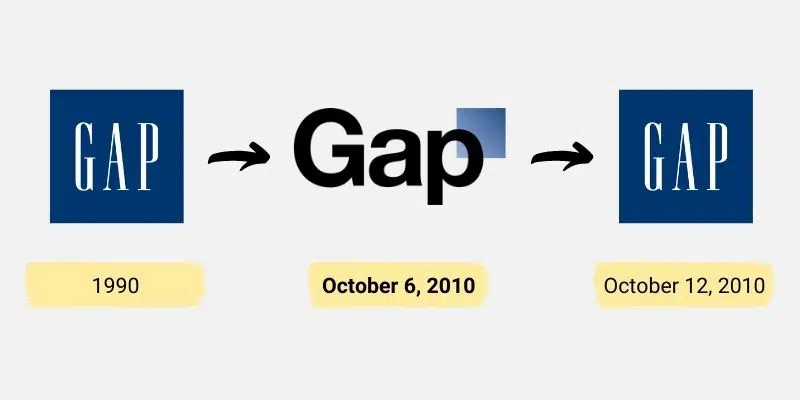
Eliminated distinctive assets. The iconic orange-with-straw image was removed. The distinctive cap (shaped like an orange half) was changed. Everything recognizable disappeared.
Over-indexed on "modern." The new design was cleaner, more contemporary — and completely generic. Customers couldn't find the product on shelves.
Massive financial impact. Sales dropped 20% in one month. The company reverted to old packaging, eating the entire rebranding investment plus sales losses.
Lesson: Recognition in crowded environments (like retail shelves or crowded SaaS categories) is worth protecting. "Modern" isn't a strategy.
Post-Rebrand: Measuring Success
How do you know if the rebrand worked? Establish metrics before launching:
Brand Health Metrics
Aided awareness. Do more people recognize you when prompted?
Unaided awareness. Do more people think of you unprompted when category need arises?
Brand associations. Are you associated with intended attributes? Are negative associations declining?
Conversion rates. Are prospects converting at higher rates?
Pricing power. Can you raise prices without losing customers?
Talent acquisition. Are you receiving more qualified applications? Improving offer acceptance rates?
Sales velocity. Are deals closing faster?
Connect brand investment to business outcomes. The ROI case made before rebranding should be validated after.
Consistency Metrics
Brand compliance audit. Across touchpoints, how consistently is the new brand applied?
Time to consistency. How long until all touchpoints reflect the new brand?
Guideline adoption. Are teams using brand assets and templates? What barriers exist?
The best rebrand, poorly executed, fails. Measurement should track implementation quality, not just strategic intent.
The Executive Summary on Rebranding
Rebrand when:
Strategic foundation is broken
Brand actively hurts business outcomes
Company has fundamentally transformed
Acquisition or merger demands consolidation
Don't rebrand when:
You're bored with the current brand
New leadership wants visible change
Competitors rebranded
You're trying to fix non-brand problems
If you rebrand:
Preserve recognition assets where possible
Connect new to old through strategic bridge
Communicate staged: internal → customers → public
Measure before, during, and after
Execute with confidence — hesitant rebrands fail more than bold ones
Rebranding is a powerful tool. Like any powerful tool, it causes damage when misused. The framework above helps ensure that when you do rebrand, it's for the right reasons, at the right time, in the right way.
Now let's tackle the practical question many founders face: how do you find the right branding partner?
How to Find the Right Startup Branding Agency
You've decided to invest in brand. Now what?
For most founders, the next step is finding a partner — an agency, studio, or consultant who can guide the process. This is where many startups stumble. They hire the wrong partner, get mediocre results, and conclude that "branding doesn't work."
The problem isn't branding. The problem is fit.
This section covers how to evaluate agencies, what to expect from the process, and how to set up engagements for success. We'll also share a curated list of agencies worth considering at different stages and budgets.
Agency vs. Freelance vs. In-House: Which Model Fits?
Before evaluating specific partners, understand the options.
Branding Agencies
Full-service firms with dedicated teams for strategy, design, and implementation.
Pros:
Comprehensive capability across disciplines
Process-tested across many clients
Team depth for complex projects
External perspective unclouded by internal politics
Smaller teams (2-15 people) with focused expertise.
Pros:
Direct access to senior talent
More flexible, adaptive process
Often better value for mid-range budgets
Deep specialization in specific categories or styles
Cons:
Limited bandwidth for large-scope projects
May lack capability in certain areas (motion, development)
Business continuity risk if key people leave
Less geographic reach for global implementations
Best for: Seed to Series B companies, focused engagements (identity only, naming only), founders who want hands-on collaboration.
Independent Consultants/Freelancers
Individual practitioners with specific expertise.
Pros:
Lowest cost option
Maximum flexibility
Direct relationship with the person doing the work
Can assemble custom team for specific needs
Cons:
Limited bandwidth
May lack full discipline coverage
Quality varies enormously
Less infrastructure for complex projects
Best for: Pre-seed and seed startups with limited budgets, specific tactical needs (logo refresh, messaging tune-up), founders with strong design opinions who need execution support.
In-House Team
Building internal brand capability.
Pros:
Deep context and institutional knowledge
Available for ongoing needs
Fully aligned with company interests
Long-term cost efficiency at scale
Cons:
Hard to attract top talent without established brand
Limited external perspective
May lack process rigor of agencies
Fixed cost regardless of project flow
Best for: Post-Series B companies with ongoing brand needs, companies where brand is core to product experience, organizations with design-centric cultures.
Many successful companies use hybrid models — external agency for major strategic work, internal team for ongoing execution and evolution.
What to Look for in a Branding Partner
Regardless of model, evaluate partners against these criteria.
Strategic Capability
The best design in the world fails without strategic foundation. Evaluate:
Do they lead with strategy or visuals? If the portfolio is all pretty pictures with no explanation of thinking, be cautious. Strong agencies can articulate why they made decisions, not just show what they made.
Can they explain their process? Look for clear methodology. Agencies that "just figure it out" often deliver inconsistent results.
Do they push back? In initial conversations, do they accept your framing or challenge it? Partners who just say yes deliver what you asked for, not what you need.
What strategic frameworks do they use? Positioning models, brand architecture approaches, workshop methodologies — sophistication here signals strategic depth.
"Nailing down your positioning from the beginning makes everything else easier. It all starts with nailing down your positioning."
Your agency partner should share this belief. If they want to jump straight to logos, find someone else.
Category Experience
Relevant experience accelerates everything:
Do they understand your business model?SaaS, marketplace, fintech, hardware — each has distinct brand dynamics. Agencies with category experience arrive with context.
Have they worked at your stage? Branding a seed startup differs from rebranding a Series D company. Process, stakeholder dynamics, and deliverables vary.
Do they know your audience? Enterprise buyers, developers, consumers, SMBs — each requires different approaches. Look for relevant audience experience.
Can they show relevant case studies? Not exact matches, but analogous situations. "We helped a B2B fintech startup clarify positioning" is more relevant than "we rebranded a consumer packaged goods company."
That said, don't over-index on exact category match. Fresh perspective sometimes produces breakthrough work. Balance category knowledge with creative capability.
Design Quality
Evaluate the work itself:
Is it distinctive? Does their work stand out, or does it all look like current trends? Agencies that follow fashion produce work that dates quickly.
Is it systematic? A logo is a small part of brand identity. Look for comprehensive systems — color, type, iconography, photography, motion — that hold together across applications.
Is it appropriate? Does the work fit the clients it was made for? A playful consumer brand should look different from a serious enterprise platform. Appropriateness shows strategic thinking manifest in design.
Does it work at scale? Check implementations across touchpoints. Does the brand hold up on websites, in products, in presentations, in physical applications? Systems that only work in controlled portfolio contexts fail in real-world deployment.
Browse portfolios critically. Identify 2-3 projects you genuinely admire and can articulate why. If nothing resonates, move on.
Working Style Fit
The relationship matters as much as the capability:
Communication style. Do they communicate clearly? Are they responsive? Initial interactions predict future collaboration.
Decision-making approach. Do they present one recommendation or multiple options? Both approaches can work, but know what you're getting.
Collaboration model. How much will you be involved? Some agencies run highly collaborative processes; others prefer to go away and return with finished work. Match to your preference.
Team composition. Who will actually do the work? Meet the people, not just the pitch team. Junior staff doing senior work is common at large agencies.
Feedback handling. How do they respond to critique? Defensiveness is a red flag. Professional partners welcome substantive feedback while pushing back on arbitrary changes.
References and Reputation
Do your diligence:
Client references. Ask to speak with past clients. Prepare specific questions: Did the project stay on timeline and budget? How was collaboration? Would you hire them again?
Industry reputation. What do other founders, designers, and marketers say? Communities like Designer News, Twitter/X, and founder networks surface reputation signals.
Team background. Where did the principals come from? What's their trajectory? Pedigree from respected agencies (Pentagram, IDEO, Landor, Google) often (but not always) indicates capability.
Longevity and stability. How long has the agency existed? What's staff turnover like? Continuity matters for long-term brand partnership.
Industry lists. Rankings from publications like Ad Age, Creative Review, and Fast Company (though take with skepticism — some are pay-to-play).
Founder networks. Ask other founders who they used. Y Combinator alumni networks, First Round community, local startup communities.
Reverse engineering. Identify brands you admire. Check their websites, press releases, or LinkedIn for agency credits.
Agency directories.Clutch, Agency Spotter, and similar platforms aggregate options with reviews.
Aim for 8-12 candidates at this stage.
Step 3: Screen to Short List
Narrow to 3-5 candidates through:
Portfolio review. Does the work quality and style fit your needs?
Website/positioning evaluation. How do they present themselves? Is it clear who they serve and how they're different?
Initial outreach. Send brief inquiry. Evaluate responsiveness and tone.
Budget sanity check. Many agencies post pricing ranges or will share ballpark quickly. Screen out mismatches.
Capability match. Do they offer what you need? Some agencies don't do naming. Some don't do implementation. Verify fit.
Step 4: Chemistry Meetings
Meet short-listed candidates (video or in-person):
Present your brief. Share context, needs, and constraints. See how they respond.
Ask about process. Have them walk through how they'd approach your project.
Meet the team. Who would work on this? What's their background?
Discuss past work. Ask them to explain a relevant case study in depth — not just what they made, but why.
Probe on failures. What projects didn't work? What did they learn? Self-awareness signals maturity.
Trust your gut. Do you want to work with these people for months? Chemistry matters.
Step 5: Proposals and Pricing
Request formal proposals from 2-3 finalists:
Scope definition. What exactly is included? What's excluded?
Process and timeline. Phases, milestones, deliverables, estimated duration.
Team and roles. Who works on what?
Pricing structure. Fixed fee, hourly, retainer? What triggers additional costs?
Payment terms. Deposit, milestone payments, final payment timing.
Ownership and usage. Who owns the work? Are there licensing limitations?
Compare proposals carefully. Lowest price rarely means best value. Evaluate what you get for what you pay.
Step 6: Final Selection
Make your choice based on:
Capability confidence. Can they deliver what you need?
Strategic alignment. Do they understand your business and market?
Chemistry. Will collaboration be productive?
Value. Is the investment justified by expected outcomes?
Risk assessment. What could go wrong? How would you mitigate?
Inform winners and losers promptly and professionally. The startup world is small; agency relationships matter even when you don't hire.
Setting Up for Success
Hiring the right agency is necessary but not sufficient. Set up the engagement for success:
Clear Contracts
Scope documentation. Detailed description of what's included. Ambiguity breeds conflict.
Change process. How are scope changes handled? What triggers additional cost?
Approval process. How many rounds of revision are included? What happens after?
Timeline commitments. Milestones with dates. Consequences for delays (both sides).
Kill fee. If you need to terminate early, what's the financial arrangement?
IP assignment. Clean transfer of all created intellectual property.
Effective Kickoff
Stakeholder alignment. Get everyone who will approve work aligned before starting. Mid-project stakeholder emergence kills timelines.
Access provision. Agency needs access to existing assets, research, documentation, and key people. Prepare in advance.
Communication norms. How will you communicate? How quickly? Through what channels?
Decision rights. Who can approve what? Clarity prevents bottlenecks.
Success metrics. Agree on how you'll evaluate outcomes.
Productive Collaboration
Give honest feedback. Sugarcoating wastes everyone's time. Be direct about what's not working and why.
Separate subjective from strategic. "I don't like this color" is different from "this color doesn't fit our enterprise positioning." Both are valid, but distinguish them.
Trust the process. Agencies have seen more branding projects than you have. Their process exists for reasons. Fight the urge to skip steps.
Make timely decisions. Delayed decisions delay projects. When input is requested, provide it quickly.
Protect the work internally. Brand projects attract opinions. Manage stakeholders so the agency isn't designing by committee.
Common Pitfalls to Avoid
Death by committee. Too many decision-makers produce mediocre consensus. Keep the core team small.
Scope creep. "While we're at it" additions compound. Stick to defined scope or formally expand (with budget).
Premature attachment. Falling in love with early concepts prevents exploration of better options. Stay open through the process.
Last-minute stakeholders. The executive who shows up in final review with strong opinions they should have shared earlier. Prevent through process discipline.
Implementation abandonment. Great strategy and identity, poorly implemented because budget or attention ran out. Reserve resources for activation.
Not all agencies serve startups well. Many prefer large clients with large budgets. Here's a curated list of agencies known for startup work, organized by focus and typical engagement size.
Top-Tier Global Agencies
For Series C+ companies with $250K+ brand budgets:
Pentagram — The world's largest independent design consultancy. Founded in 1972, partner-led model ensures senior involvement. Clients include Mastercard, Slack, Warner Bros. Expect $300K-$1M+ for comprehensive brand work.
Wolff Olins — Global brand consultancy known for bold, transformative work. Uber, Google, USA Today rebrands. Strong strategic capability.
Landor — Part of WPP. One of the oldest branding firms, founded 1941. Deep heritage in brand architecture and corporate identity. BP, FedEx, Barclays.
Interbrand — Also WPP. Created the first brand valuation methodology. Known for Best Global Brands ranking. Strategic rigor with global implementation capability.
Collins — New York and San Francisco. Known for distinctive, culturally-aware work. Spotify, Twitch, Dropbox. Strong visual and motion design.
Growth-Stage Specialists
For Series A-C companies with $75K-250K budgets:
Koto — Studios in London, Berlin, Los Angeles, Sydney. Strong tech client roster: Revolut, Headspace, Sonos. Known for systematic identity work.
Red Antler — Brooklyn-based, consumer brand focus. Early partners with Casper, Allbirds, Brandless. Strong at brand positioning for DTC companies.
Instrument — Portland. Digital-native agency strong in both brand and product. Spotify, Nike, Google projects.
Ueno — Now part of Twitter/X (though some team members have started new ventures). Known for systematic design and strong digital integration.
Moving Brands — Global studios. Work spans strategy through implementation. Netflix, BBC, Salesforce clients. Strong motion design capability.
Startup-Focused Boutiques
For Seed-Series B companies with $25K-100K budgets:
Ramotion — San Francisco. Tech startup specialists. Brand identity and UI/UX integration.
Metabrand — Global agency specializing in tech startups, SaaS, fintech, and B2B technology companies. Y Combinator startup experience. Full-service from strategy through web implementation.
Agency pricing varies enormously. Here's what to expect at different investment levels:
$10K-25K: Logo and basic identity system from freelancer or junior boutique. Limited strategy. Suitable for pre-seed startups needing "good enough" to launch.
$25K-75K: Comprehensive visual identity from boutique agency. Some strategic foundation. Seed to Series A appropriate.
$75K-150K: Full brand development including strategy, naming (if needed), verbal and visual identity. Established boutique or mid-tier agency. Series A-B appropriate.
$150K-300K: Enterprise-grade brand development. Deep strategy, comprehensive identity systems, implementation support. Top boutique or global agency. Series B+ appropriate.
$300K+: Full rebrand with global agency, extensive stakeholder process, comprehensive activation support. Series C+ or major corporate rebrand.
These ranges exclude implementation costs (website, collateral, etc.) which often equal or exceed the core brand investment.
DIY works for getting started. But recognize the limitations: you don't know what you don't know. Professional partners catch blind spots and elevate outcomes in ways self-service can't match.
Making the Investment Decision
The final question: is professional branding help worth it?
Return to the data. McKinsey documents 20% performance gaps between strong and weak brands. Interbrand identifies $3.5 trillion in unrealized brand value. Millward Brown finds 13% price premiums for strong brands.
Against those potential returns, agency investment is modest. A $100K brand engagement that improves CAC by 15% and enables 10% price premium pays back quickly at any reasonable revenue scale.
The question isn't "can we afford professional branding?" It's "can we afford not to?"
Of course, investment must be proportional to stage. A pre-revenue startup shouldn't spend $200K on brand. But they also shouldn't spend nothing. The right investment scales with business reality while recognizing brand as the multiplier it is.
Choose partners wisely. Set engagements up for success. Invest at a level that makes strategic sense. Then execute with commitment.
Good brand partners are force multipliers. Find the right one.
Startup Branding Resources: Tools, Templates, and FAQ
This final section compiles practical resources for founders at every stage — from pre-seed companies doing everything themselves to growth-stage startups managing sophisticated brand programs.
For (target customer) Who (statement of need or opportunity), (Product name) is a (product category) That (statement of key benefit). Unlike (competing alternative),(Product name) (statement of primary differentiation).
Use this as your foundational positioning document. If you can't fill it in crisply, your positioning isn't clear enough.
The Strategyzer Value Proposition CanvasFrom Alex Osterwalder, creator of the Business Model Canvas. Maps customer jobs, pains, and gains against your product's features, pain relievers, and gain creators. Visual tool for ensuring product-market fit translates to brand fit.
April Dunford's Obviously Awesome FrameworkFrom Obviously Awesome, the definitive book on positioning for tech products. Five components: competitive alternatives, unique attributes, value (and proof), target market characteristics, market category.
Geoffrey Moore's Positioning StatementFrom Crossing the Chasm, classic framework for technology product positioning:
For (target customer) who (statement of need), the (product name) is a (product category) that (key benefit). Unlike (primary competitive alternative), our product (primary differentiation).
Similar to First Round framework but emphasizes competitive framing.
Brand Platform Templates
The Brand KeyFramework used by Unilever and other multinationals. Components: root strengths, competitive environment, target, insight, benefits, values/personality, reasons to believe, discriminator, brand essence.
Brand PyramidLayered model moving from functional attributes (base) to emotional benefits to brand personality to brand idea (apex). Useful for ensuring brand has both rational and emotional dimensions.
Aaker Brand Identity ModelFrom David Aaker, pioneer of brand strategy. Four perspectives: brand as product, brand as organization, brand as person, brand as symbol. Comprehensive but can be complex for early-stage startups.
Naming Resources
Naming Generators and Tools
Namelix — AI-powered name generator. Useful for initial exploration but requires human curation.
Squadhelp — Crowdsourced naming contests plus curated name marketplace.
Panabee — Name search with domain availability checking.
Wordoid — Creates made-up words based on language patterns. Good for neologism exploration.
Nameberry — Originally for baby names but useful for understanding name psychology and trends.
Domain Tools
Domainr — Fast domain availability search across all TLDs.
Namecheap — Domain registration with competitive pricing.
Logo Design Love — David Airey's blog on logo design principles and case studies.
Logobook — Curated logo gallery searchable by style and industry.
For early-stage startups with no design budget, AI tools like Looka or Brandmark can generate starting points — but recognize these as placeholders, not final solutions.
Brand Guidelines and Asset Management
Guidelines Platforms
Frontify — Leading brand management platform. Guidelines, asset library, templates. Used by Uber, Lufthansa, KFC.
Zeroheight — Design system documentation. Strong integration with Figma. Popular with product-focused companies.
Brandfolder — Digital asset management with brand guidelines capability.
Bynder — Enterprise digital asset management and brand portal.
Notion — Not purpose-built but many startups use Notion for lightweight brand documentation.
Uber Brand — Visual identity and usage guidelines.
GitLab Handbook — Includes brand guidelines as part of comprehensive company documentation.
Messaging and Copywriting Resources
Writing Tools
Hemingway Editor — Simplifies complex writing. Good for ensuring brand copy is accessible.
Grammarly — Grammar and style checking with tone detection.
Copy.ai — AI copywriting assistant for generating options.
Jasper — AI content generation with brand voice training.
Writer — Enterprise writing platform with style guide enforcement.
Messaging Frameworks
StoryBrand FrameworkFrom Donald Miller's book Building a StoryBrand. Positions customer as hero, brand as guide. Seven-part framework: character, problem, guide, plan, call to action, success, failure.
Message HouseClassic framework with three levels: roof (key message), pillars (supporting points), foundation (proof points). Ensures all messaging ladders to core theme.
PAS FrameworkProblem, Agitation, Solution. Simple copywriting structure that ensures customer-centric messaging.
Seed: $25K-75K (boutique agency or comprehensive freelance)
Series A: $75K-150K (established boutique or junior tier of top agency)
Series B+: $150K-500K+ (top-tier agency with comprehensive scope)
These ranges exclude implementation costs. A reasonable rule of thumb: brand investment should be 2-5% of annual marketing budget, with higher percentages early (when establishing brand) and lower percentages later (when maintaining).
The McKinsey data showing 30% marketing efficiency gains and 10% revenue growth suggests appropriate brand investment pays back quickly.
Q: When is the right time to invest in professional branding?
Three inflection points often trigger investment:
Pre-launch: When you're about to go to market and need to make a first impression
Post-product-market fit: When you've validated the product and need to scale acquisition
Major milestone: Fundraising round, expansion, acquisition, or pivot that creates strategic shift
The wrong time: when the company is still figuring out what it does or who it serves. Brand amplifies clarity; it can't create clarity.
Q: Should we do brand strategy before visual identity?
"Branding is the process of connecting good strategy with good creativity."
Visual identity without strategic foundation is decoration. It might look good but won't perform. Strategy ensures design choices are purposeful, not arbitrary.
Q: How do we know if our positioning is right?
Test it:
Can you fill in the positioning statement crisply without hedging?
Do customers recognize themselves in your target definition?
Is your differentiation actually different, or do competitors say the same thing?
Can every team member articulate the positioning consistently?
Does it guide decisions (what features to build, what customers to pursue)?
If answers are no, positioning needs work.
Q: How important is the name really?
Important, but not as important as founders think.
"Whatever name you choose, be careful. Names stick."
A great name helps. A bad name hurts. But a mediocre name with great execution beats a great name with poor execution. Don't let naming perfectionism delay launch.
That said, 100% of top 20 Y Combinator companies by valuation have their .com domain. Take that signal seriously.
Design Questions
Q: How many logo concepts should we explore?
Quality process typically involves:
Dozens of initial sketches (internal to designer/agency)
3-5 distinct directions presented to stakeholders
2-3 rounds of refinement on selected direction
Final mark with variations and guidelines
Beware processes that present only one concept (may miss better options) or ten+ concepts (suggests lack of strategic filtering).
Q: How do we give good feedback on design?
Separate reactions:
Gut reaction: Your immediate feeling (valid but explore why)
Strategic assessment: Does it fit positioning and audience?
Functional evaluation: Does it work across required applications?
Avoid: "I don't like it" without explanation, prescriptive solutions ("make the logo bigger"), designing by committee, involving too many stakeholders.
Best feedback explains the problem, not the solution. "This feels too playful for our enterprise audience" is better than "use darker colors."
Q: Should we follow design trends?
Cautiously. Trend-following produces work that dates quickly. Trend-awareness helps ensure you don't look accidentally dated.
The goal is timelessness appropriate to your category. Enterprise SaaS can be more conservative. Consumer apps might embrace more contemporary aesthetics. But even trend-forward work should have strategic rationale beyond "this is what's popular now."
"Today's real competition doesn't come from other companies but from the extreme clutter of the marketplace."
Distinctiveness beats trendiness.
Q: When should we update our visual identity?
Consider refresh when:
Identity is 5+ years old and showing age
Company has evolved beyond what identity can express
Competitive landscape has shifted significantly
Technical requirements have changed (new platforms, new applications)
Consistency has degraded significantly
Don't refresh because you're bored or because a competitor did. Refresh when strategic need exists.
Process Questions
Q: How long does branding take?
Typical timelines:
Logo and basic identity: 4-8 weeks
Comprehensive visual identity: 8-12 weeks
Full brand development (strategy + verbal + visual): 12-20 weeks
Major rebrand with implementation: 6-12 months
Faster is possible but increases risk. Slower happens with complex stakeholder environments or scope expansion.
Q: Who should be involved in brand decisions?
Small team with clear decision rights:
Core team (2-3 people): Makes decisions, provides feedback, maintains vision
Extended team (3-5 people): Provides input at key milestones
Broader organization: Informed, not consulted
Brand by committee produces mediocrity. Limit active decision-makers.
Q: How do we handle internal disagreement on brand direction?
Tie decisions to strategy. If positioning is clear and agreed, it becomes the arbiter of brand decisions. "Which option better expresses our positioning?" is more productive than "which do we like better?"
When true disagreement persists, the person with clearest strategic ownership (usually CEO or marketing leader) makes the call. Consensus is nice but not required.
Q: What deliverables should we expect from a branding engagement?
Brand is a compounding asset. Early returns are modest; long-term returns are substantial. Interbrand's data shows strong brands generate 31% higher shareholder returns — but this accumulates over years, not weeks.
Final Checklist: Is Your Startup Brand Ready?
Use this checklist to assess brand readiness:
Strategy Foundation
☐Positioning statement is complete and crisp☐ Target customer is specific and validated☐ Differentiation is real and defensible☐ Brand platform (purpose, vision, values) is documented☐ Leadership is aligned on strategic direction
Verbal Identity
☐ Name is trademarked or clearance confirmed☐ Domain is secured☐ Value proposition is clear and compelling☐ Key messages are documented☐ Tone of voice is defined with examples
Visual Identity
☐ Logo works at all sizes and contexts☐ Color palette is defined with usage guidance☐ Typography system is selected and licensed☐ Visual elements (icons, imagery, etc.) are defined☐ Guidelines document the complete system
Implementation
☐ Website reflects current brand☐ Product UI is consistent with brand☐ Sales and marketing materials are updated☐ Social profiles are current☐ Team has access to brand assets and guidelines
Governance
☐ Brand ownership is clear (who approves what)☐ Asset management system exists☐ Feedback process is defined☐ Measurement approach is established☐ Evolution process is planned
Score yourself honestly. Gaps reveal priorities for investment.
Conclusion: Brand as Competitive Advantage
We've covered a lot of ground:
Why branding matters:CB Insights shows 90% of startups fail; 19% lose to competition. Brand differentiation is survival, not vanity.
What branding actually is: Not logos — the gut feeling people have about your company. Strategy made visible and verbal.
How to build it: Discovery, strategy, verbal identity, visual identity, activation. In that order. Skipping steps creates cracks.
When to rebrand: When strategic foundation is broken or company has fundamentally transformed. Not when you're bored or a competitor did.
Finding partners: Match agency model and capability to your stage and needs. Set engagements up for success through clear scope, small decision teams, and strategic alignment.
Resources: Tools exist for every stage and budget. Use them.
The founders who treat brand as strategic infrastructure — not decorative afterthought — build companies that last. They attract better customers, command higher prices, recruit stronger talent, and raise capital on better terms.
"A charismatic brand is any product, service or company for which people believe there is no substitute."
That's the goal. Build a brand that makes switching unthinkable.
Ready to Build Your Startup Brand?
If you're a founder ready to invest in brand — or wondering if it's the right time — we're here to help.
Metabrand specializes in branding for tech startups, SaaS, fintech, and B2B technology companies. We work with companies from seed through Series C, providing strategy, identity, and web implementation.