By clicking "Accept all cookies", you agree to storing cookies on your device to enhance site navigation, analyze site usage and assist in our marketing efforts as outlined in our privacy policy.
By clicking 'Accept all cookies', you agree to storing cookies on your device to enhance site navigation, analyze site usage and assist in our marketing efforts as outlined in our privacy policy.
Tech company branding is harder than most brand work — not because the design is more complex, but because the underlying problem is. Technology companies sell things that are intangible, fast-changing, and often categorically undefined. The product exists as software, infrastructure, or a service that can't be photographed, held, or experienced in ten seconds. Generic branding approaches, built on decades of consumer goods and services thinking, break down against these constraints.
This guide covers tech company branding as a strategic discipline: what it involves, why the generic approach fails, what effective technology branding actually looks like in practice, and how the priorities shift depending on company stage and subvertical. If you're building or refining a tech brand — whether you're pre-launch or scaling past Series B — the frameworks here apply directly.
What Is Tech Company Branding?
Tech company branding is the strategic and creative discipline through which a technology company defines how it is positioned in its market, how it presents itself visually and verbally, and how it ensures consistency between its marketing identity and its actual product experience.
That formal definition covers more ground than most companies realize when they first approach brand work.
Technology branding operates across three connected layers. The first is strategic positioning: the decisions about which market segment a company serves, which competitors it's being compared to, what category it occupies or is creating, and what claim it can credibly make about why it's the right choice for its target buyer. Positioning is the foundation. Technology branding without it produces well-executed aesthetics that don't move the business.
The second layer is brand identity — the visual and verbal system that expresses the strategic position. Logo, color system, typography, motion, photography direction, tone of voice, messaging hierarchy. For technology companies, this system has to perform across a wider range of surfaces than most industries: marketing website, product UI, developer documentation, pitch decks, conference booths, job listings, and increasingly, developer-facing surfaces like CLI tools, API documentation, and open-source repositories.
The third layer is product-brand alignment — the consistency between the brand's external promise and the actual product experience. This is where technology branding diverges most sharply from branding in other industries. A consumer goods brand can maintain complete separation between its marketing identity and its product design. In tech, the product interface is a brand surface. Error messages, loading states, empty states, onboarding flows, documentation tone: these are all expressions of the brand, whether or not the brand team has thought about them that way. The best technology branding treats product and brand as integrated disciplines, not parallel ones.
Why Tech Companies Need a Specialized Branding Approach
Branding for tech companies requires specific expertise that generic brand agencies haven't necessarily built. Here's where the breakdown typically happens.
The product is intangible. You can't photograph software on a white background. You can't put infrastructure in a lifestyle shoot. Technology branding has to translate what a product does — often something technically complex and abstract — into a story that lands in seconds with buyers who have many alternatives. Agencies without tech sector experience consistently underestimate how hard this translation work is and how much it shapes every downstream brand decision.
Technical and business audiences must be served simultaneously. A B2B SaaS company selling to engineering teams and CFOs at the same time needs a brand that reads as technically credible to engineers and as commercially substantive to business buyers. These audiences have different trust signals, different vocabulary expectations, and different levels of tolerance for marketing language. A brand system that works well for one can actively undermine credibility with the other.
The product changes faster than brand systems typically accommodate. Enterprise consumer goods companies can run the same brand for a decade. Software products ship major changes every two to four weeks. Technology branding has to be designed for flexibility — a brand system that requires a design agency to implement every product update is already broken. This constraint shapes naming decisions, visual language choices, and the modularity of the identity system.
Categories are frequently new or undefined. Selling a known product in a known category is a simpler brand problem than creating a new category. Many technology companies are doing the second: they're explaining what their product is before they can explain why it's better. Technology branding in these situations has to do significant education work while still differentiating. Generic brand thinking assumes the category is understood and focuses on preference. In tech, that assumption often fails.
Baseline expectations are set by category leaders with massive brand budgets. Engineers and technical buyers have been surrounded by Apple, Google, Stripe, and Linear's design quality for years. Their aesthetic baseline is calibrated to the best in the industry. A technology startup competing for developer attention or enterprise credibility doesn't get to lower those expectations — it has to meet them with a fraction of the resources.
The pace of market change requires brand flexibility. Technology markets evolve quickly. Positioning that was accurate eighteen months ago may be wrong today. A brand system so rigid that it can't accommodate a strategic pivot without a full rebrand becomes a liability. Effective technology branding builds in adaptability — the visual and verbal system is designed to stretch with the business, not constrain it.
Core Components of Effective Tech Company Branding
Positioning sharper than generic tech slogans
Most technology brands open with aspirational language: "the future of work," "AI for everyone," "the platform that scales with you." These phrases communicate nothing to a sophisticated buyer. Effective tech brand positioning identifies a specific target audience, a specific problem that audience has, and a specific mechanism by which the product solves it — and expresses that combination in language that's accurate enough to exclude the wrong prospects. Specificity that narrows the audience is a feature, not a liability. The startup branding guide covers positioning methodology in more depth as a foundational brand exercise.
Naming that holds up at scale
Tech company naming involves constraints that are specific to the industry: domain availability, trademark clearance across relevant jurisdictions, product family naming logic, and the way the name scales as the company grows from a single product to a platform. The most common mistake is optimizing for "sounds good in the room" rather than "clears trademark search in the US and EU, survives a category pivot, and makes sense as a product family when we have five products." Names that feel arbitrary at founding often create expensive problems later.
Visual identity that works at product and marketing scale simultaneously
Technology brands have to function across more environments than most other brand systems. The logo has to work at 60 pixels as an iOS app icon and at 4K on a keynote slide. The color system has to pass WCAG contrast requirements in a product UI while still being visually distinctive in marketing materials. The typography has to work in developer documentation — where monospace is often appropriate for code — and in a homepage hero. These constraints should inform the identity design from the beginning, not be accommodated as afterthoughts. The best tech website designs illustrate how identity scales across marketing surfaces when these constraints are handled well.
Environmental graphics from the Xenith identity by Metabrand
Motion system for a motion-native medium
Technology products live in digital environments where motion is the baseline. Technology branding increasingly includes a motion identity: principles for how the brand moves across product demos, explainer animations, loading states, and video content. This isn't decorative — motion that explains a product workflow does more communication work than a paragraph of copy. Brand systems for tech companies that don't address motion are leaving a significant expression surface undefined.
Writing voice for technical content
Documentation, error messages, empty states, onboarding copy, API reference text: these are all brand surfaces. The tone of voice used in technical content tells users something about the company — whether it treats them as intelligent adults, whether it maintains consistency, whether it has invested in the craft of technical writing. Companies with strong tech brands have brand voice guidelines that extend explicitly to technical content, not just marketing copy.
Developer-facing brand expression
For companies with developer audiences, the brand extends into surfaces that most brand teams never consider: GitHub repository presentation, CLI tool design, SDK naming conventions, developer documentation architecture, community forums, and changelog copy. Developers form strong opinions about companies based on these surfaces. A company with polished marketing materials and badly organized documentation is giving contradictory signals about its quality and intentionality.
Launch video as the brand system in motion
A launch video is often the first time a technology brand has to work as a complete system. Identity, motion, product interface, voice, and narrative all need to come together in a format that can explain a complex product quickly and make it feel worth paying attention to. The strongest launch videos do more than demonstrate features: they establish the problem, create momentum, and give audiences a reason to remember the company after the launch moment has passed. Flowjam specializes in launch videos for AI and tech startups, with work for more than 25 Y Combinator companies, including Bloom and HeyGen. Its story-driven approach helps startups translate complex products into clear and compelling launch narratives.
Tech Branding by Stage
Branding priorities in technology companies are not constant — they shift significantly as the company grows. Misaligned investment at any stage creates problems that compound.
Pre-seed and seed. At this stage, positioning clarity is more valuable than a comprehensive visual identity. A founder who can explain exactly what the product does, who it's for, and why it's differentiated — in language that lands with the target buyer in under thirty seconds — has what matters most. The visual brand needs to be credible, not award-winning. A minimal viable brand system: a functional logo, a coherent color and type direction, a website that communicates the product and value proposition clearly. Seed-stage companies that over-invest in identity at the expense of positioning clarity tend to look good and convert poorly.
Series A. This is the natural inflection point for the first serious brand engagement for most tech startups. The company has product-market fit evidence, a clearer target customer profile, and is beginning to build a team large enough that brand inconsistency becomes a real operational problem. Series A is when the transition from "figure it out as we go" brand to a sustainable brand system makes commercial sense. Finding the best tech branding agencies that work specifically with growth-stage technology companies is the right scoping exercise at this stage.
Series B and beyond. Brand priorities at this stage shift toward scalability. The brand system needs to support a growing marketing function, a sales team with materials to produce, potentially multiple product lines with naming architecture implications, and increasingly international markets. This is when brand governance becomes relevant — who can make what brand decisions, and what requires central review. For companies that built a quick-and-dirty MVP brand at seed stage, Series B is often when the first strategic rebrand makes sense.
Scale and pre-IPO. At this stage, brand architecture — the relationship between the company brand, product brands, and any sub-brands — becomes a strategic question that requires formal work. Enterprise sales requirements put new demands on the brand system: procurement teams evaluate brand professionalism as a proxy for company stability. Employer brand becomes a significant concern as the company competes for talent at scale. Brand investment at this stage is a commercial and operational necessity, not a marketing preference.
Tech Branding Across Subverticals
Technology isn't one market. The branding requirements shift considerably depending on which technology category a company operates in.
SaaS and B2B software
SaaS branding operates in one of the most visually and verbally converged markets in technology. The challenge isn't differentiation from incumbents — it's differentiation from a hundred companies that have all drawn from the same design references. Effective SaaS branding is specific: specific about the target user, specific about the problem, specific about the mechanism. For SaaS-specific brand strategy, working with a SaaS branding agency that understands how the product and marketing surfaces interact is typically more effective than a generalist approach.
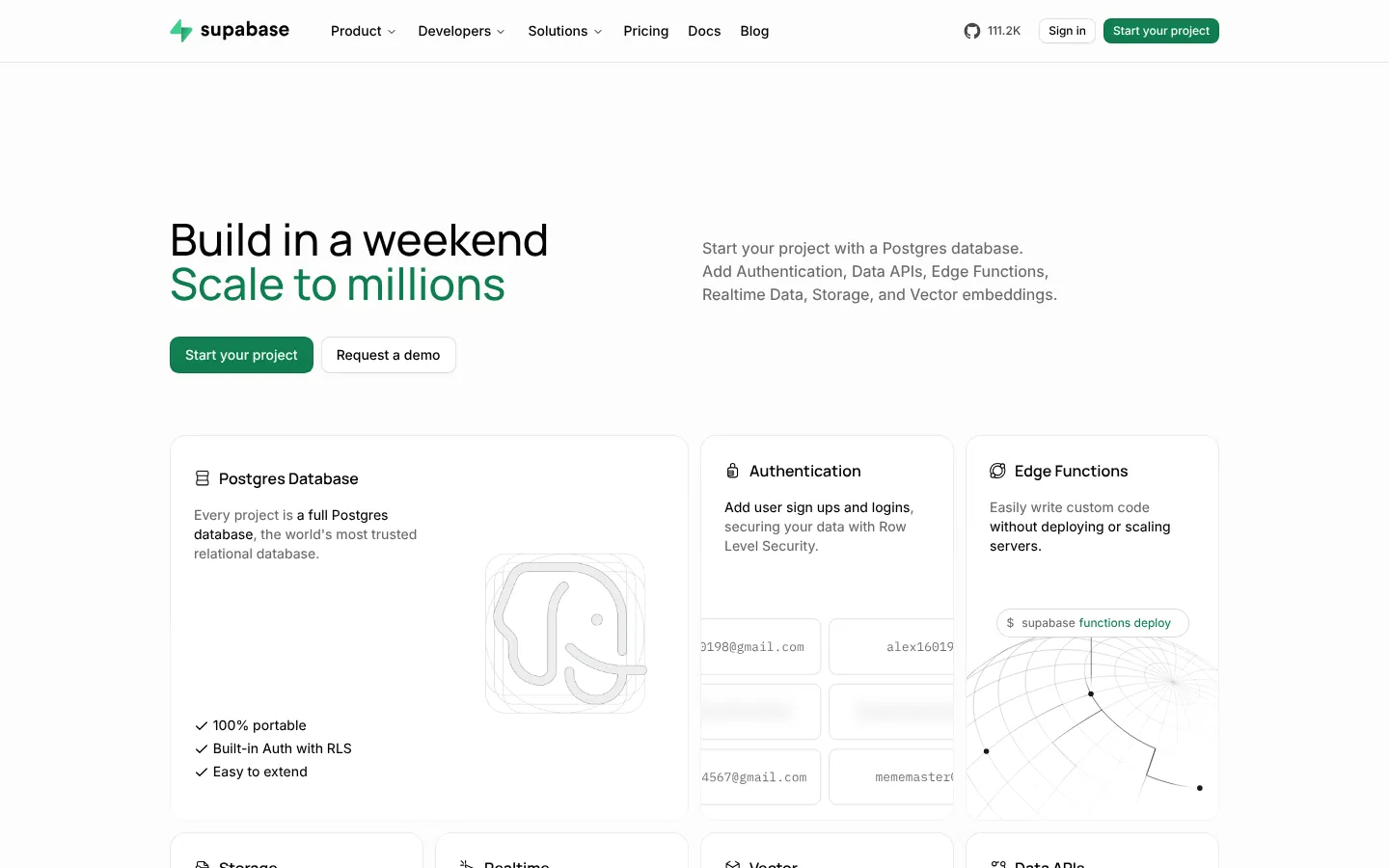
Developer audiences reject marketing language with unusual consistency. The brand surfaces that matter most in developer tooling are documentation quality, API design, CLI experience, and GitHub presence — not logo refinement. Developer tool branding has to earn credibility through demonstrated technical quality before it earns attention through aesthetics.
supabase.com
AI companies
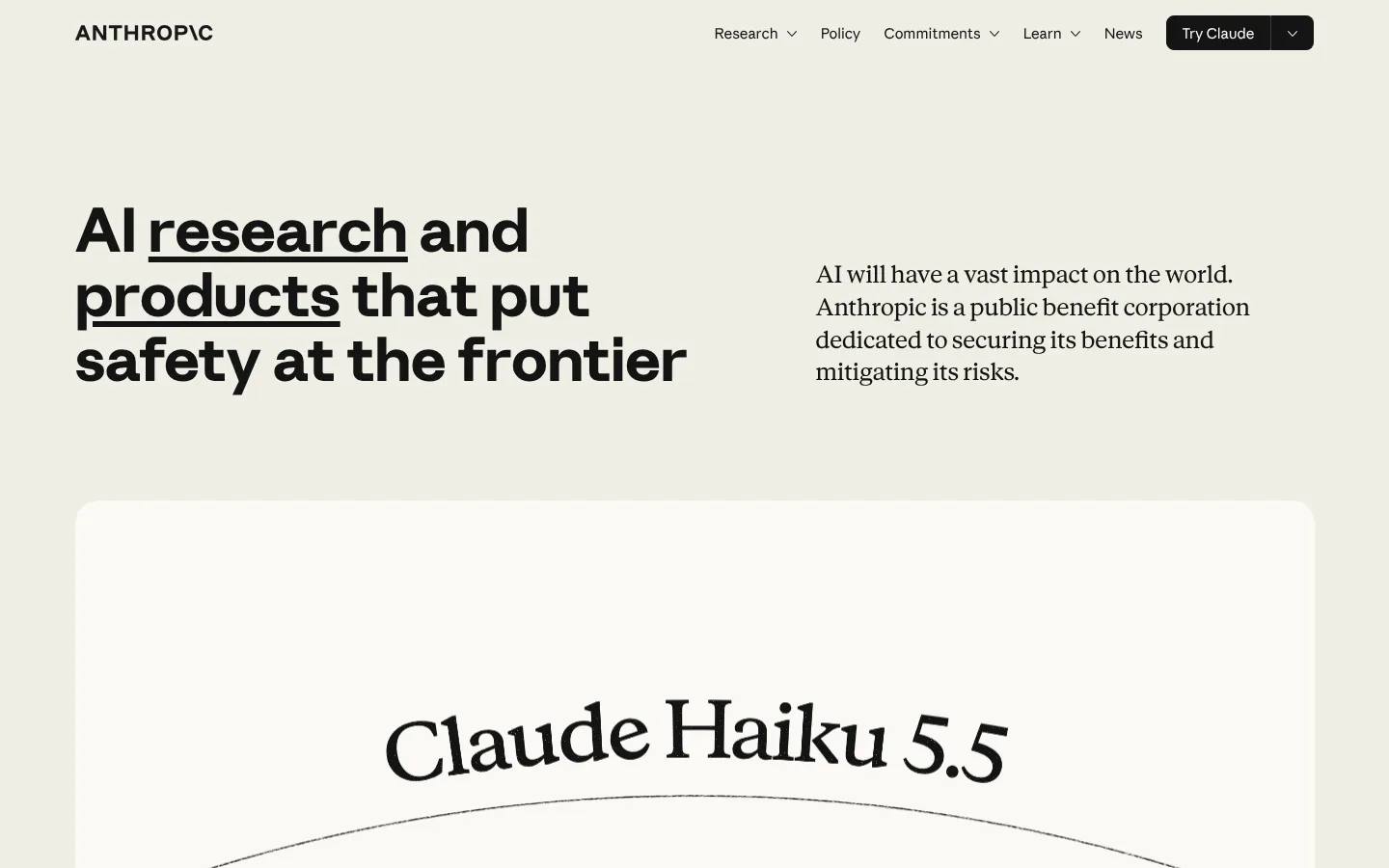
AI company branding is currently navigating a category in rapid redefinition. The same core technology can be positioned as a research lab, a product company, or an infrastructure provider — each with different visual and verbal conventions, different trust signals, and different buyer expectations. The brand has to signal clearly which positioning applies, rather than trying to claim all three simultaneously.
anthropic.com
Fintech
Financial services branding requirements apply to technology companies operating in fintech: compliance signals, regulatory transparency, and the trust indicators that financial buyers expect. Fintech branding has to simultaneously communicate modernity (the reason to choose this over a legacy financial provider) and stability (the reason to trust it with financial operations). A fintech branding agency with sector experience understands how to hold these two requirements without defaulting to one at the expense of the other.
Biotech branding involves long development cycles, highly technical primary audiences, and extremely high stakes for credibility claims. The brand needs to maintain coherence across timelines that make most SaaS brand systems look short-lived. Scientific credibility signals — research publications, clinical trial status, regulatory milestones — are first-class brand assets in biotech, not supplementary content. Generic tech agencies typically lack the sector understanding to work in biotech without significant ramp-up time.
Health tech
Health tech branding sits at the intersection of medical credibility and consumer accessibility — a balance that requires genuine specialization. Brands that lean too far toward medical seriousness alienate consumer audiences; brands that lean too far toward consumer accessibility create skepticism in clinical environments. HIPAA compliance considerations and the specific trust vocabulary of healthcare add further constraints that health tech branding agency partners typically need to have worked through before.
Cybersecurity
Enterprise cybersecurity branding operates in a sector where trust is the entire value proposition. The visual language has converged toward dark palettes, shield iconography, and defensive metaphors — which means those signals no longer differentiate. Companies building distinctive cybersecurity brands are moving away from the category visual defaults while maintaining the credibility signals that enterprise security procurement requires.
Unlike pure software companies, hardware and deep tech businesses have tangible products that can be shown — a significant brand asset. The challenge is communicating technical sophistication to investors and enterprise buyers while avoiding the inaccessibility that pure technical language produces. Brand systems in this category need to work across engineering-facing and business-facing contexts with equal effectiveness.
The Tech Branding Process: What It Actually Looks Like
Technology branding engagements follow a different path than branding for consumer goods or professional services, not because the creative work is fundamentally different but because the discovery and strategy phases involve different inputs.
Discovery in a tech branding engagement includes technical deep-dives that don't appear in most brand briefs: understanding what the product actually does at a functional level, mapping the technical complexity that the brand needs to translate, and identifying the specific vocabulary that target audiences use versus the vocabulary the internal team uses. Without this technical grounding, positioning work produces language that sounds right internally but misses the buyer.
Positioning work is the critical path. In tech company branding, a visual identity built on weak positioning is cosmetic work — it produces a brand that looks good and fails to move qualified pipeline. We've seen this frequently: a well-executed identity applied to unclear positioning creates a company that looks professional but can't explain itself to buyers. Positioning first, identity after.
The creative work integrates with the product team throughout, not just at the handoff. Typography decisions affect product UI hierarchy. Color system decisions have WCAG implications. Naming decisions affect product domain architecture. Identity work done in isolation from product context produces deliverables that don't survive contact with the actual product environment.
Implementation scope is broader in tech than in most brand engagements. A finished brand system for a technology company typically needs to be applied across marketing website, product UI components, developer documentation, sales materials, and sometimes conference and event assets. Planning for implementation from the start — rather than treating it as a downstream problem — changes what the creative system needs to deliver.
Working with a specialized tech branding agency typically means shorter ramp-up time on the discovery and positioning phases because the sector context is already established. The agency knows the category conventions, understands what technical buyers evaluate, and can identify where the company's actual differentiation lies relative to the competitive set. Timelines for a typical Series A engagement run three to six months; scaled operations with broader implementation scope run longer. For a detailed branding cost breakdown across different tech company stages, the full cost guide covers current investment ranges.
Measuring Tech Brand Impact
Brand investment in technology companies is difficult to measure directly, but there are specific metrics that reliably reflect brand quality.
Inbound lead quality. A brand that attracts the right buyers creates a measurable effect on inbound MQL quality. Companies with strong, specific brands attract better-fit prospects because the specificity of the brand signal pre-qualifies visitors. If the proportion of inbound leads that convert to qualified pipeline increases after a brand investment, that's a signal the positioning work landed correctly.
Enterprise deal velocity. In enterprise sales, brand recognition and credibility shorten procurement timelines. Security questionnaires, vendor evaluations, and procurement reviews all proceed faster when the brand is recognizable in the relevant category. This is a harder metric to isolate, but enterprise sales teams typically have strong intuitions about whether brand credibility is accelerating or slowing deals.
Developer adoption and community growth. For developer-facing products, organic developer adoption is a brand metric. Developers who share tools with their teams, contribute to open-source repositories, or recommend products in community forums are expressing brand preference. The rate of this activity is measurable through GitHub stars, community forum growth, and developer conference attendance.
Brand search volume. Organic branded search volume — people searching specifically for the company by name — is a signal of brand awareness and intent. Growing branded search volume, tracked over time, reflects the cumulative effect of brand investment and product quality.
Employer brand metrics. Talent acquisition is a brand function that technology companies frequently underweight. The best tech talent has multiple options; they evaluate employer brands with the same scrutiny they apply to products. Offer acceptance rates, time to hire for competitive roles, and the quality of inbound applications all reflect brand health alongside business health.
Common Tech Branding Mistakes
Treating brand as a marketing problem, not a product problem. Technology company branding is most effective when the brand and product teams work together. Delegating brand entirely to marketing while keeping product design separate produces inconsistency at the surfaces that matter most to technical buyers.
Copying the visual language of companies operating at a fundamentally different scale. A twelve-person startup that designs its brand to look like Apple or Google has borrowed vocabulary that doesn't fit the context. Enterprise buyers and technical evaluators can tell the difference between a brand that reflects genuine design maturity and one that has adopted the surface signals of a much larger company. The aspiration is appropriate; the direct visual copying isn't.
Overengineering the brand system before product-market fit. A comprehensive brand system — motion guidelines, illustration libraries, photography direction, exhaustive component libraries — is the right investment for a Series B company. It's the wrong investment for a pre-seed company that's still finding its core customer. Premature brand sophistication redirects resources from the customer development and product work that actually determines whether the company survives.
Ignoring the developer audience. B2B companies with developer users frequently underinvest in developer-facing brand surfaces and overinvest in enterprise marketing materials. For developers, documentation quality, GitHub presence, and CLI design are brand surfaces. Companies that invest heavily in a polished marketing site but ship poorly organized documentation are sending contradictory quality signals to the audience most likely to advocate for the product internally.
Rebranding on a two-year cycle instead of letting the brand mature. Technology companies are prone to treating their brand as a product that needs constant iteration. But brand equity accumulates with time and consistent application. A company that rebrands every eighteen to twenty-four months is resetting brand recognition repeatedly rather than building it. The correct trigger for rebranding is a genuine strategic change — not restlessness, a new design trend, or a leadership preference.
Frequently Asked Questions
What is tech company branding?Tech company branding is the strategic and creative work of defining how a technology company is positioned in its market, how it presents itself visually and verbally, and how it maintains consistency between its marketing identity and its product experience. It differs from generic branding in scope, constraints, and the technical context required to do it well.
How is branding for tech companies different from other industries?Technology companies face specific constraints: intangible products that can't be photographed or physically demonstrated, audiences that span both technical and business buyers simultaneously, products that change faster than most brand systems accommodate, and categories that are often new or undefined. These constraints require a different approach than branding for consumer goods, hospitality, or professional services.
When should a tech startup invest in branding?Seed stage: invest in positioning clarity and a minimal viable identity — enough to be credible, not more than the business needs at that stage. Series A: invest in a comprehensive brand system that can scale with the company. The trigger is usually "our brand is creating friction in sales or recruiting" or "we're about to grow the team significantly and inconsistency is becoming a real problem."
How much does tech company branding cost?A focused seed-stage identity engagement typically runs $15,000 to $40,000. A comprehensive Series A brand engagement — strategy, identity system, messaging, guidelines — runs $40,000 to $120,000. Enterprise-scale brand work with broad implementation scope runs $150,000 and above. The primary drivers are strategic depth, implementation scope, and stakeholder complexity.
Do tech companies need a specialized branding agency?Not always, but often. The case for specialization is strongest when the product is technically complex, the audience includes developers or technical buyers, the category is new or competitive, or the brand needs to integrate closely with product design. For these situations, a generalist agency's ramp-up cost on sector context often exceeds the premium for a specialized partner.
What makes a tech brand successful?Clarity about what the product does and who it's for, specificity in the positioning claim, a visual and verbal system that holds up across technical and marketing surfaces, and consistent execution over time. The brands that succeed in technology markets earn trust through specificity, not aspiration — and they maintain that specificity as the company grows.
Figuring Out What Your Tech Company Actually Needs?
The harder question is usually not execution — it's scoping. Whether your situation calls for full brand work, focused positioning, a visual refresh, or something else entirely is worth establishing before any project starts. That's where we begin with new clients.
Metabrand
Team
Brand and Website from 3–4 weeks
Metabrand is a startup branding agency working closely with founders and technology teams to bring ambitious ideas to life and give them the clarity, character, and presence they deserve.
Thank you! Your submission has been received!
Oops! Something went wrong while submitting the form.
Learn More
Next Reads for Visionary Founders. Still Curious? Dive Deeper.