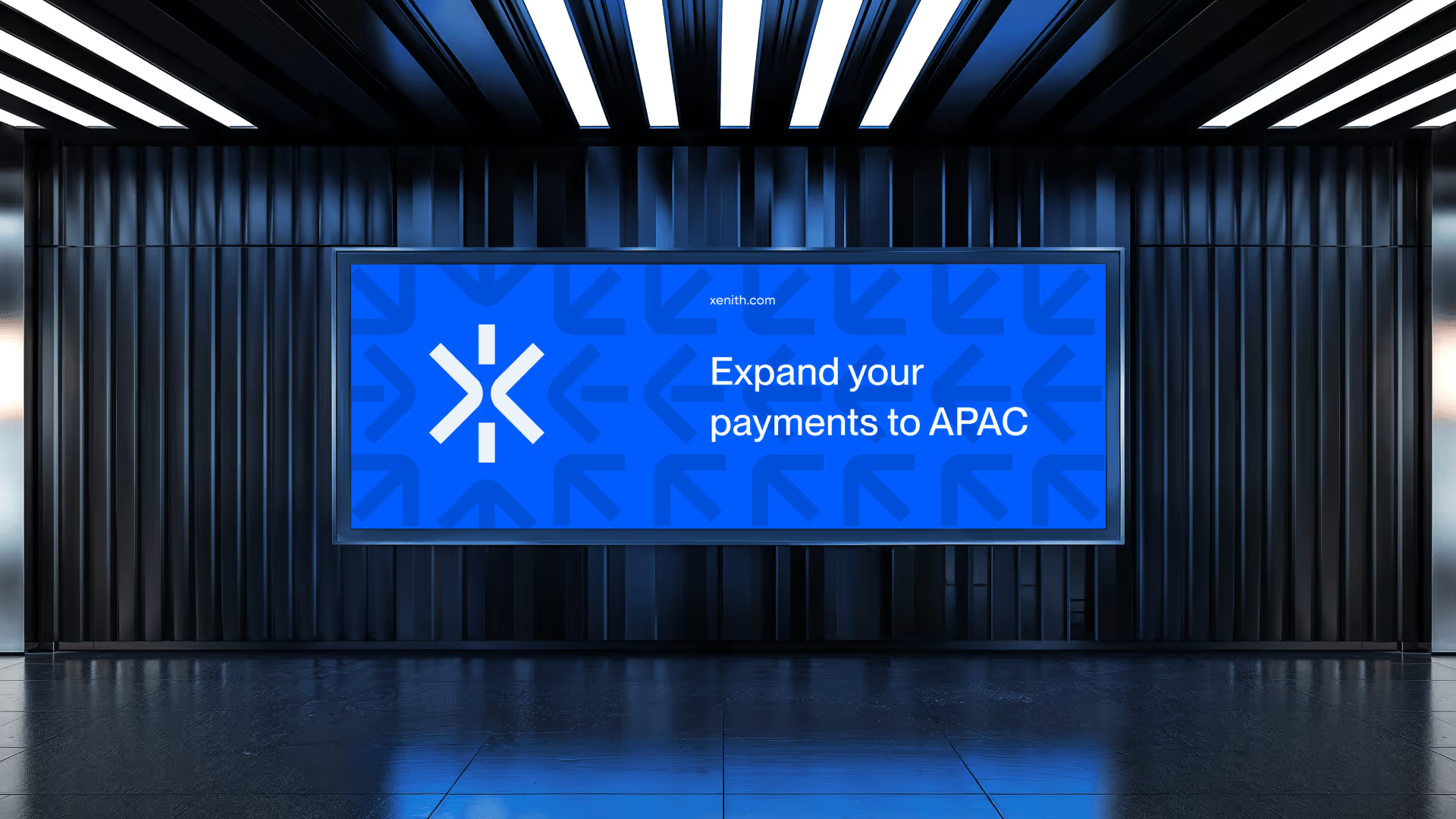
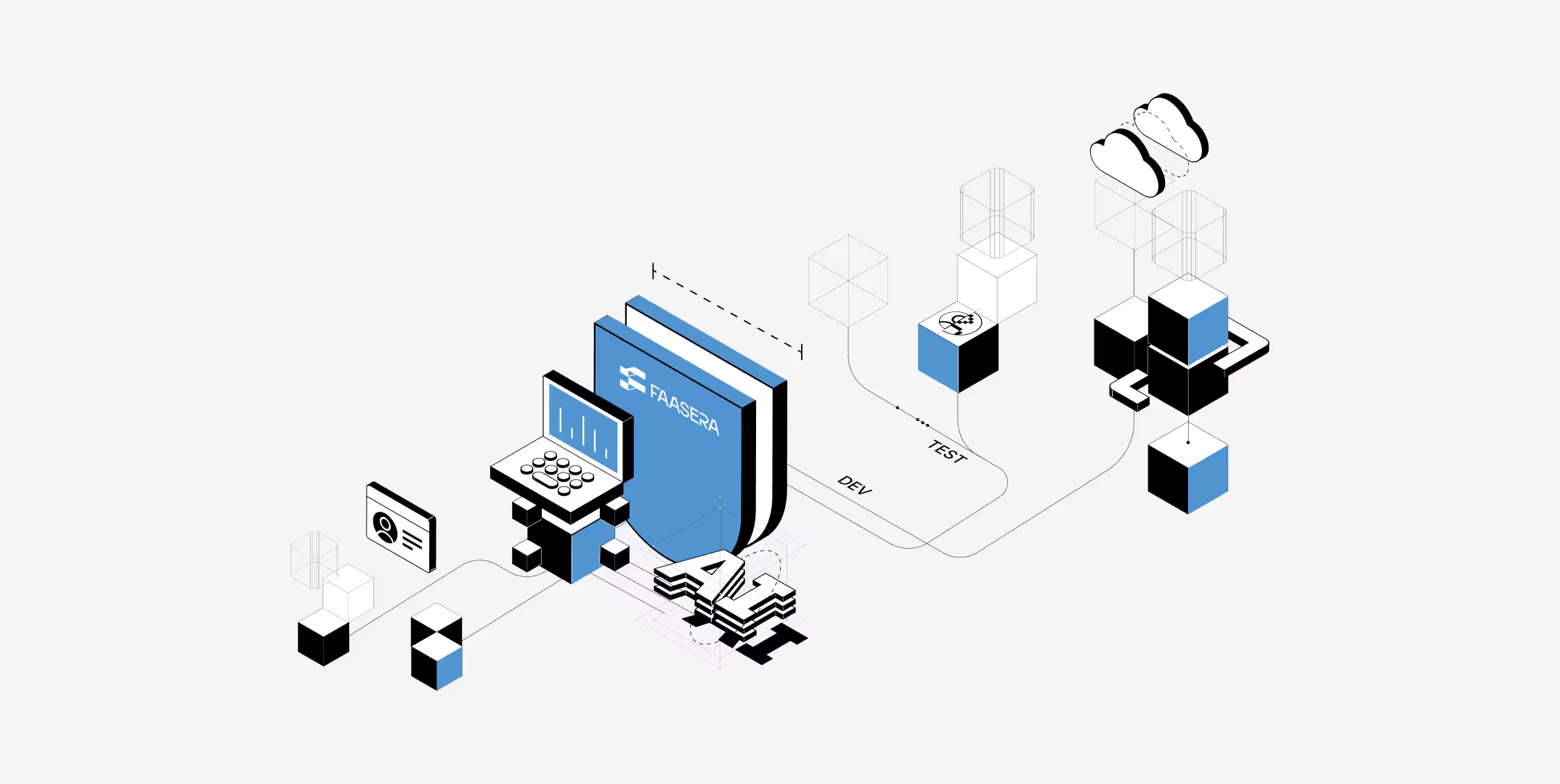
B2B branding services built for how B2B companies actually sell. Unlike B2C, B2B branding has to move buying committees, survive procurement reviews, and hold up through sales cycles that last six to eighteen months. Every visual and messaging decision carries credibility weight long before a deal closes.
Get a B2B Brand Plan


B2B branding must address multiple stakeholders with different priorities across longer decision timelines. Where B2C branding drives individual purchase decisions, B2B branding has to influence committees, survive procurement review, and maintain consistency across sales cycles that can last twelve to eighteen months. The trust signals that matter — compliance certifications, named customer logos, ROI evidence — are different from B2C social proof.
Most Metabrand B2B branding engagements range from $25K to $150K depending on scope. A focused brand strategy and identity engagement for a B2B startup runs toward the lower end. A comprehensive rebrand with full identity system, website, and sales enablement materials for a mid-market company runs toward the higher end. We confirm a fixed quote after a brief scoping conversation.
Focused engagements take 4 to 8 weeks. A strategy-only or identity-only scope can be completed in 3 to 4 weeks. Projects that include a full Webflow build alongside brand strategy and identity run 8 to 12 weeks. We don't run open-ended retainers — every engagement has a defined scope and delivery timeline.
A complete B2B brand identity includes logo system with all approved variations, color palette with accessibility specifications, typography hierarchy, supporting graphic elements, and a brand guidelines document. We also typically include a messaging framework — the core value proposition and messaging architecture — because B2B visual identity without verbal identity produces inconsistent sales communications.
Both, with different scopes. B2B startups at seed and Series A get a focused engagement: positioning work, a scalable identity system, and a website. Mid-market and enterprise companies get a more comprehensive scope including sales enablement materials, design systems for product alignment, and sometimes internal brand rollout support.
A credible, consistent brand reduces the time enterprise buyers need to build internal confidence in a vendor. When the marketing site, the demo, the proposal, and the contract all feel like the same company operating at the same level of quality, procurement concerns about vendor stability and organizational maturity decrease. We've seen well-executed B2B rebrands measurably accelerate enterprise deal timelines by reducing the qualification questions that delay procurement.
Yes. Sales deck design, one-pager development, ROI calculator design, competitive positioning templates, and integration playbooks are standard components of our B2B branding engagements. We design these as extensions of the brand system, not as separate projects, so AEs and SDRs have materials that reflect the brand accurately without requiring constant design support.
Yes. We design in Figma and build in Webflow — end to end, with no handoff between design and development teams. The sites are optimized for Core Web Vitals, structured for SEO from the ground up, and built so marketing teams can manage and update content independently.
We structure review checkpoints around the decisions that actually require stakeholder input, rather than presenting everything for full-committee review. Typically: a positioning and direction review at strategy completion, a creative direction review before full development, and a delivery review. We also produce brief stakeholder presentation decks for clients who need to sell the brand work internally.
B2B visual design prioritizes credibility, clarity, and scalability over distinctiveness and emotional engagement. B2C brands can afford more visual risk because individual buyers make decisions faster and the brand equity recovery time is shorter. B2B brands are evaluated by committees over months — visual choices that read as experimental or trend-driven create procurement hesitation that B2C brands don't face in the same way.
Yes. B2B rebranding is a significant portion of our work — companies that outgrow their founding brand, companies going through enterprise market transition, and post-acquisition identity resolution. See our rebranding agency page for the full scope of rebrand engagements.
Yes. We work with B2B companies headquartered in the US, UK, and EU. For international engagements, we consider localization requirements at the brand strategy stage — color and imagery associations, linguistic considerations for verbal identity, and compliance requirements that vary by market — rather than adapting afterward.