By clicking "Accept all cookies", you agree to storing cookies on your device to enhance site navigation, analyze site usage and assist in our marketing efforts as outlined in our privacy policy.
By clicking 'Accept all cookies', you agree to storing cookies on your device to enhance site navigation, analyze site usage and assist in our marketing efforts as outlined in our privacy policy.
The fintech branding landscape in 2026 features agencies ranging from global design powerhouses to specialized boutiques focusing exclusively on financial services. Choosing the right partner requires understanding not just design quality but strategic approach, industry expertise, and how well processes align with startup realities.
This guide profiles the best fintech branding agencies operating in 2026—from established names commanding premium pricing to emerging studios offering startup-friendly approaches. We'll examine their strengths, typical investments, and ideal client profiles to help you find the right match.
Finding the best fintech branding agency for your company means matching expertise and approach to your stage, budget, and specific needs—not just choosing the most famous name or lowest price.
"The best fintech branding agency for your company isn't necessarily the most expensive or most famous. It's the one that understands your specific challenges—whether that's building consumer trust, communicating complex infrastructure, or differentiating in crowded payments space—and has process that matches your timeline and budget."
Before diving into specific agencies, let's establish evaluation criteria.
Industry Expertise
Fintech-Specific Experience: Has the agency worked with banking, payments, investing, or financial infrastructure companies? Do they understand regulatory considerations, trust-building, and financial customer psychology?
Portfolio Quality: Beyond aesthetics, examine strategic thinking. Do case studies explain positioning, messaging, and business context? Can you see problem-solving approach?
Category Knowledge: Do they understand your specific fintech category—consumer banking vs. B2B infrastructure vs. investment platforms—and its unique challenges?
Strategic Depth
Process: Do they start with strategy before design? Is positioning, competitive analysis, and messaging development included?
Research: Do they conduct customer research and testing, or jump straight to design?
Thinking: In conversations, do they ask strategic questions or focus only on aesthetics?
Startup Alignment
Timeline: Can they deliver in weeks, not months? Do they understand startup urgency?
Pricing: Do they offer packages matching different funding stages, or only six-figure projects?
Flexibility: Can they adapt to changing requirements, or rigid in process?
Communication: Do they work directly with founders, or through layers of account management?
Deliverables
Completeness: Do they provide full brand systems (visual + verbal + guidelines + templates), or just logos?
Quality: Is work production-ready, or requires additional investment to implement?
Ownership: Do you receive source files and full usage rights?
Support: Is post-delivery support included, or every adjustment billable?
Headquarters: Global (Remote-First) Founded: 2018 Starting Investment: $15,000 Typical Timeline: 30-45 days
Overview: Metabrand specializes in branding for fintech and SaaS startups, focusing on fast delivery without sacrificing strategic depth. They've worked with payment platforms, banking apps, and financial infrastructure across US, UK, EU, and Asia markets.
Strengths:
Fintech-specific expertise across consumer and B2B financial services
30-day process delivering complete brand systems rapidly
Tiered packages ($15K, $25K, $40K) matching different startup stages
Experience with regulatory considerations and compliance
Best For: Seed to Series A fintech startups needing professional, trust-building brands without corporate timelines or pricing.
Why They Stand Out: Metabrand balances speed with quality, delivering comprehensive brand systems in timeframes that work for startups. Their fintech focus means understanding industry-specific challenges without explanation.
Flexibility: Adapting to your specific needs, timeline, and constraints
We understand fintech challenges intimately—regulatory considerations, trust-building, complex concept simplification, differentiating in crowded categories—and design accordingly.
Conclusion: Finding Your Match
The best fintech branding agency for your company depends on stage, budget, timeline, and specific needs. Global powerhouses offer premium work but require premium investment. Specialized studios offer expertise but may have limited availability. Startup-focused agencies offer speed and affordability but varying quality levels.
Key selection criteria:
Fintech experience understanding your specific challenges
Strategic depth beyond just aesthetics
Process fit matching your timeline and style
Investment alignment with your budget and stage
Quality standards appropriate for financial services
Communication chemistry and responsiveness
Don't just choose based on brand name or lowest price. Choose based on best fit for your specific situation and needs.
The right agency partner accelerates growth through strategic, trust-building branding. The wrong partner wastes time and money delivering work that doesn't serve business objectives.
Take time to evaluate options thoroughly. The brand you build now will serve you for years.
Fintech isn't a single category. A branding agency for fintech companies needs to understand that neobanking, crypto, payments, wealthtech, and insurtech each require different approaches. The visual conventions, trust signals, regulatory contexts, and audience expectations differ significantly across these subverticals.
Consumer neobanking and digital banking
Consumer neobanking brands (Chime, Revolut, Monzo, N26) balance approachability with the trust signals customers expect from financial institutions. The visual language tends toward friendly color palettes, human-centered imagery, and clear typography—distinct from traditional banking's stiff corporate aesthetics but still professional enough to hold deposits. Neobanking branding agencies understand this specific tension and design accordingly.
The branding challenge for neobanks is signaling reliability without looking like a legacy bank. Success means creating visual systems that feel modern and customer-friendly while still communicating the security and stability that financial products demand. Agencies with neobanking experience know which trust signals matter (clear disclosures, regulated entity references, security iconography) and which are signals of outdated banking (gold accents, serifed corporate logos, pillar imagery).
Payments and payment infrastructure
Payment companies (Stripe, Adyen, Square, Airwallex) face different branding challenges depending on whether they serve consumers, businesses, or developers. Consumer payment brands prioritize trust and transaction confidence. B2B payment infrastructure brands prioritize technical credibility and integration clarity. Developer-facing payment APIs emphasize documentation quality, code clarity, and DX (developer experience) as brand surface.
A payment branding agency should differentiate between these audiences in the work they produce. Stripe's brand works for developers because it treats documentation, code samples, and product UI as brand expressions. A payment company marketing to enterprise CFOs requires completely different brand surfaces. Effective payment branding aligns visual and verbal identity to the actual buyer.
Crypto and Web3 brands
Crypto and Web3 branding has evolved significantly from the early hyper-technical aesthetic. Today's successful crypto brands (Coinbase, Phantom, Uniswap, OpenSea) often look closer to consumer fintech than to early blockchain projects. They prioritize approachability, clarity, and compliance signaling—especially important as regulation increases.
Crypto branding requires handling specific visual and verbal conventions: wallet iconography, chain logos, token symbols, and governance terminology. A branding agency working in crypto needs fluency in these conventions plus the judgment to know when to follow them and when to break from crypto visual clichés. Companies trying to reach mainstream audiences often benefit from breaking category conventions; companies targeting crypto-native users benefit from respecting them.
Wealthtech and investing platforms
Wealthtech brands (Robinhood, Wealthfront, Betterment, Public) balance accessibility with credibility signals appropriate to money management. The branding challenge is communicating that the platform is legitimate enough to trust with savings while remaining approachable enough for users without finance backgrounds.
Wealthtech branding agencies understand that the visual hierarchy of the brand needs to adjust based on the audience sophistication level. A retail investing app for first-time users requires different brand surfaces than a platform serving accredited investors or institutional clients. The same parent brand often needs sub-brand treatments to address different sophistication tiers.
Insurtech and embedded insurance
Insurtech brands face the unique challenge of making historically stuffy category feel modern without trivializing the product. Companies like Lemonade, Root, and Hippo have demonstrated that insurance branding can be friendly and visually distinctive while still communicating the seriousness of the coverage.
Insurtech branding agencies navigate specific regulatory language constraints, state-by-state compliance variations, and the challenge of making insurance products understandable to consumers who typically approach the category reluctantly. The brand work extends beyond visual identity into information architecture, policy explanation, and claims experience design.
Fintech website design: a specialized discipline
Fintech website design requires different capabilities than general web design. Compliance constraints, trust signal requirements, conversion optimization for high-consideration financial products, and the need to handle complex product explanations all make fintech web design a specialization of its own.
The best fintech websites solve a specific conversion problem: turning skeptical visitors into qualified leads or activated users in industries where skepticism is rational and reversal costs are high. Unlike e-commerce (where conversion is often impulsive) or SaaS marketing (where the free trial absorbs friction), fintech web design has to build enough trust for someone to hand over financial information or commit to a financial product.
Fintech web design conventions include trust bars with regulator and partner logos, specific disclosure placement, secure-feel UI treatments, simplified product explanations with strong information architecture, and conversion paths designed around sales or onboarding stages. The best fintech websites balance these conventions with distinctive brand expression that avoids the generic "trust blue" aesthetic common to the category.
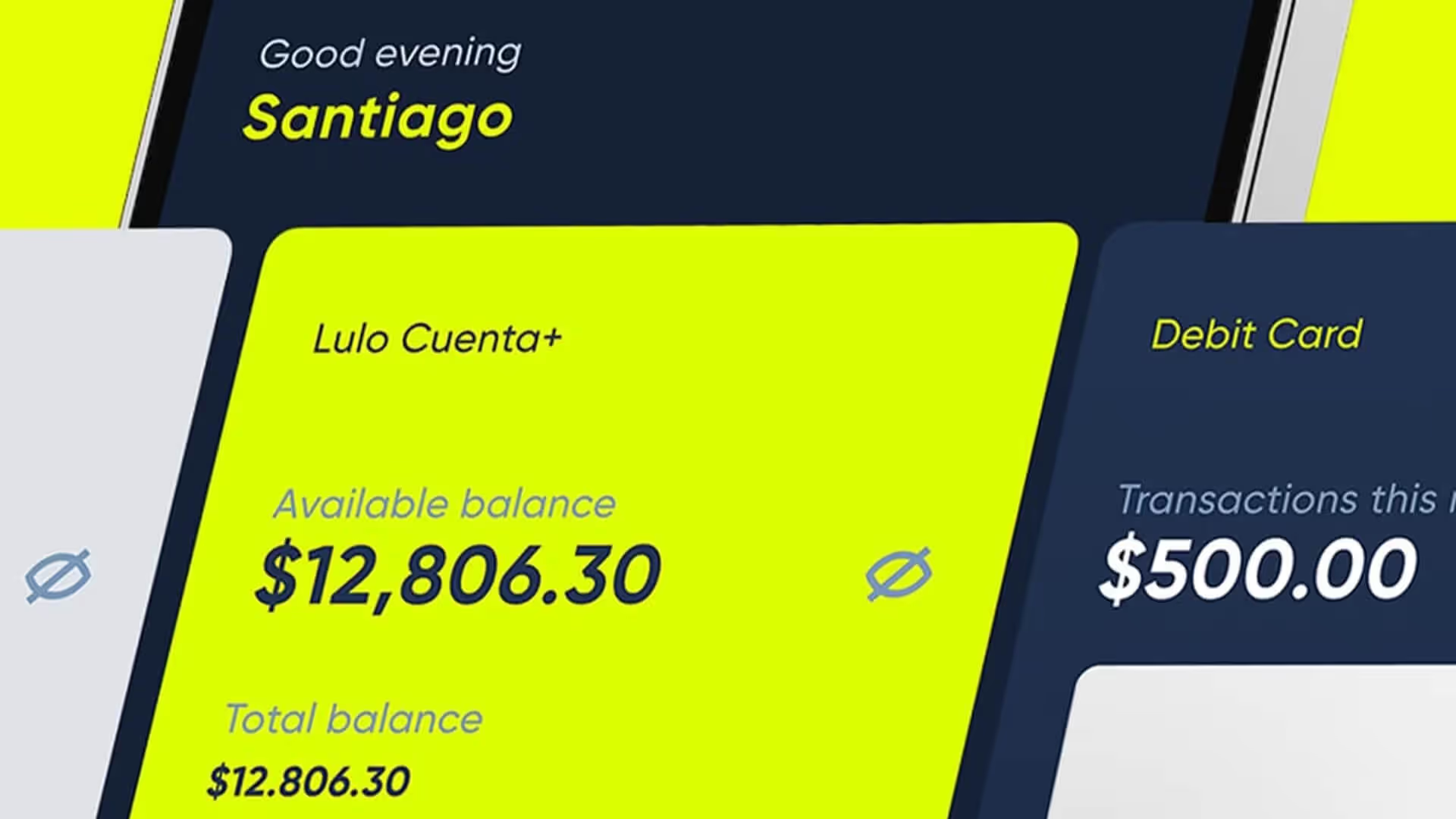
Banking app design specifically—not just the marketing site but the product interface—requires additional considerations. Security layering, transaction confirmation flows, balance display treatments, and alert hierarchies all require specialized knowledge. Fintech branding agencies working at product-level need capabilities beyond marketing site design to deliver coherent brand experiences across marketing and product surfaces.
What a fintech brand agency delivers beyond visual identity
A fintech brand agency engagement typically delivers more than a logo and color palette. Because fintech brands operate in regulated, trust-sensitive environments, the scope extends into areas that generalist branding agencies often don't cover.
Messaging architecture specifically calibrated for financial services—handling regulatory disclosures, compliance-safe claims, and the specific language financial audiences respond to. Generic brand voice guidelines don't serve fintech; voice principles need to account for how financial products are legally discussed and marketed.
Trust signal strategy—identifying which elements build credibility for your specific audience and incorporating them systematically. This includes partner logo treatments, regulatory reference conventions, security certification display, and the visual hierarchy that puts trust elements where audiences look for them.
Product UI brand integration—ensuring the marketing brand translates into the product interface where customers actually spend their time. Most fintech agencies that only deliver marketing-focused brand work leave gaps when the product UI looks like a different company. Integrated engagements design for brand consistency across every surface.
Compliance-ready content systems—templates and guidelines that help internal teams create new materials without every piece requiring legal review. Good fintech brand systems include language playbooks that make compliant communication easier, not harder.
Sales enablement materials—pitch decks, case studies, one-pagers, and email templates that carry brand consistency into the high-touch sales motions common in B2B fintech. The brand has to work in sales PDFs and email signatures, not just on the marketing site.
Frequently asked questions
What makes a fintech branding agency different from a regular branding agency?
A fintech branding agency understands regulatory constraints, trust-building requirements, and the specific customer psychology around financial products. They know which visual and verbal signals build credibility versus which create compliance risk. A regular branding agency might produce beautiful work that doesn't account for financial services realities—accidentally making compliance claims, using imagery that triggers regulatory review, or establishing voice guidelines incompatible with how financial products are legally marketed.
How much does fintech branding cost?
Fintech branding costs typically range from $15,000 to $150,000 depending on scope and stage. Seed-stage fintech startups can get a complete brand system including visual identity, verbal identity, and implementation for $15,000–$25,000 at studios specializing in startup work. Series A companies typically invest $25,000–$60,000 for more comprehensive engagements. Later-stage fintechs with regulatory complexity or multi-market rollouts often invest $60,000–$150,000+ with larger agencies. Enterprise fintech rebrands run into hundreds of thousands or more.
How long does fintech branding take?
Startup-focused fintech branding agencies deliver complete brand systems in 4–6 weeks. Mid-market engagements typically run 8–12 weeks. Enterprise fintech branding projects run 4–8 months due to stakeholder complexity, regulatory review, and multi-market coordination. Timelines shorter than 4 weeks usually compromise strategic depth. Timelines longer than 4 months usually indicate organizational complexity rather than additional design depth.
Do I need a fintech-specialized agency or can a general branding agency work?
For early-stage fintech startups with straightforward positioning, a strong generalist agency with some financial services experience can deliver good work. For complex fintech businesses—especially those with regulated products, multiple customer segments, or technical infrastructure—specialized fintech branding agencies deliver materially better results. The category knowledge reduces ramp-up time and prevents common mistakes generalists make when they don't understand financial services conventions.
What's included in a fintech brand identity?
A complete fintech brand identity includes logo system, typography selections, color palette, iconography, photography or illustration direction, UI brand tokens for product integration, messaging hierarchy, voice and tone guidelines, compliance-aware content templates, and brand guidelines documentation. Some engagements extend to website design, pitch decks, and sales enablement materials. The specific deliverables depend on scope and budget, but complete fintech brand systems go beyond logo to include the verbal and contextual elements that make the brand work in regulated environments.
Can a fintech branding agency help with crypto or Web3 projects?
Some can, most can't. Crypto and Web3 branding has specific conventions and audience expectations that require dedicated experience. Fintech agencies that have worked on crypto exchange projects, DeFi protocols, or NFT marketplaces bring relevant experience. Fintech agencies focused exclusively on traditional banking, payments, or wealthtech may not have the crypto-specific fluency needed. Ask for category-specific case studies when evaluating agencies for crypto work.
How do I evaluate a fintech branding agency before hiring?
Review category-specific portfolio work, not just overall design quality. Ask about their understanding of your specific subvertical—payments agencies should know payment flows, wealthtech agencies should know investment regulations. Request case studies that explain strategic thinking, not just visual outcomes. Discuss how they handle compliance considerations during creative work. Validate that their process fits your timeline and stage. Assess whether they work directly with founders or through layers of account management. A 30-minute discovery call usually reveals whether an agency has real fintech depth or just claims it.
Metabrand is a startup branding agency working closely with founders and technology teams to bring ambitious ideas to life and give them the clarity, character, and presence they deserve.
Thank you! Your submission has been received!
Oops! Something went wrong while submitting the form.
(Learn More)
Next Reads for Visionary Founders. Still Curious? Dive Deeper.